Washington Takes Command: The Continental Army Rises
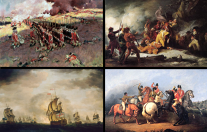
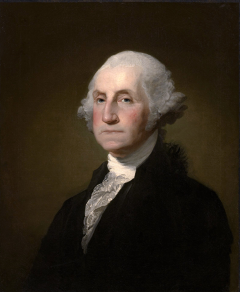
The Continental Congress unanimously appointed George Washington as commander-in-chief of the Continental Army on June 15, 1775, one day after voting to create the force. Washington, a forty-three-year-old Virginia planter and veteran of the French and Indian War, attended the session in his military uniform, the only delegate to do so, which historians have interpreted either as a signal of availability or simply as his way of expressing seriousness about the military crisis. John Adams orchestrated the appointment for strategic reasons as much as military ones. New England delegates wanted a southerner in command to bind the southern colonies to what had been, until that point, a predominantly Massachusetts conflict. Washington's selection served that purpose perfectly. He was wealthy, well-connected, carried himself with natural authority, and had more military experience than most colonial officers, though his actual combat record from the 1750s was mixed at best. His most notable engagement, the Battle of Fort Necessity in 1754, had been a defeat. Washington accepted the commission in a speech that combined humility with political shrewdness, declaring that he did not consider himself equal to the command and asking that his expenses rather than a salary be covered. He then traveled to Cambridge, Massachusetts, arriving on July 2 to take formal command of the militia forces besieging Boston. His assessment of what he found was blunt: undisciplined troops, chronic supply shortages, short enlistments, and officers chosen by popularity rather than competence. Over the following eight years, Washington lost more battles than he won. His genius lay not in tactical brilliance but in keeping an army in the field when every rational calculation said it should have dissolved. He held the Continental Army together through defeats, desertions, mutinies, congressional neglect, and the winter at Valley Forge until French intervention tipped the balance.
June 15, 1775
251 years ago
Key Figures & Places
What Else Happened on June 15
Assyrian astronomers recorded a total solar eclipse on June 15, 763 BC, noting the event in the limmu lists of King Ashur-dan III. This precise observation prov…
Pope Sergius II anointed Louis II as King of Italy in Rome, formalizing the Carolingian grip on the Italian peninsula. This coronation solidified the alliance b…
Robert I won the battle and still lost everything. He defeated Charles the Simple's forces at Soissons in 923, then took an arrow or sword blow — accounts disag…
The fleet that decided Norway's future wasn't won by numbers — Sverre's Birkebeiner force was massively outnumbered. But Sverre had a trick: he rammed Magnus's …
King Magnus V fell in the freezing waters of Sognefjord during the Battle of Fimreite, ending his long struggle for the Norwegian throne. His defeat cleared the…
King John affixed his seal to the Magna Carta at Runnymede, bowing to pressure from rebellious barons to curb his absolute power. This charter established the p…
Talk to History
Have a conversation with historical figures who witnessed this era. Ask questions, explore perspectives, and bring history to life.