Magna Carta Signed: King John Grants Rights
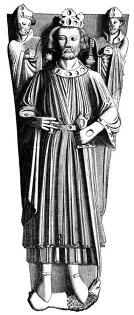
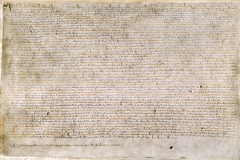
English barons forced King John to affix his seal to Magna Carta at Runnymede, a meadow along the Thames near Windsor, on June 15, 1215. The charter was the product of a political crisis, not abstract philosophy. John had lost most of England's French territories, imposed crushing taxes to fund unsuccessful military campaigns, and alienated nearly every powerful constituency in the kingdom, from feudal lords to the Church to London's merchant class. Armed rebellion, not enlightenment ideals, brought him to the negotiating table. Archbishop Stephen Langton and a group of rebel barons, calling themselves the "Army of God," drafted the initial terms. Magna Carta contained sixty-three clauses addressing specific grievances: limits on royal taxation without baronial consent, protections for the English Church, guarantees of fair trial, restrictions on the Crown's right to seize property, and regulations on debts owed to Jewish moneylenders. Most clauses dealt with narrow feudal concerns that mattered only to the thirteenth-century aristocracy. Three clauses survived to become the foundation of constitutional law. Clause 39 guaranteed that "no free man shall be seized, imprisoned, dispossessed, outlawed, exiled, or ruined in any way... except by the lawful judgment of his peers or by the law of the land." Clause 40 declared: "To no one will we sell, to no one will we deny or delay right or justice." These principles became the basis for habeas corpus, due process, and trial by jury. John repudiated the charter within weeks, and Pope Innocent III annulled it. Civil war resumed immediately. John died of dysentery in October 1216. His nine-year-old son Henry III reissued Magna Carta repeatedly during his reign, embedding it in English law. Over eight centuries, the document has been invoked by Parliament against the Stuarts, by American colonists against George III, and by the framers of the Universal Declaration of Human Rights.
June 15, 1215
811 years ago
Key Figures & Places
What Else Happened on June 15
Assyrian astronomers recorded a total solar eclipse on June 15, 763 BC, noting the event in the limmu lists of King Ashur-dan III. This precise observation prov…
Pope Sergius II anointed Louis II as King of Italy in Rome, formalizing the Carolingian grip on the Italian peninsula. This coronation solidified the alliance b…
Robert I won the battle and still lost everything. He defeated Charles the Simple's forces at Soissons in 923, then took an arrow or sword blow — accounts disag…
The fleet that decided Norway's future wasn't won by numbers — Sverre's Birkebeiner force was massively outnumbered. But Sverre had a trick: he rammed Magnus's …
King Magnus V fell in the freezing waters of Sognefjord during the Battle of Fimreite, ending his long struggle for the Norwegian throne. His defeat cleared the…
King John affixed his seal to the Magna Carta at Runnymede, bowing to pressure from rebellious barons to curb his absolute power. This charter established the p…
Talk to History
Have a conversation with historical figures who witnessed this era. Ask questions, explore perspectives, and bring history to life.