

Falklands War Ends: Argentina Surrenders at Stanley
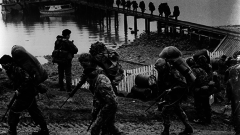
Argentine troops in Stanley capitulate to British forces after a two-month campaign, ending the conflict over sovereignty of the islands. This surrender restores British control and triggers a decade of political upheaval that topples Argentina's military junta while solidifying Margaret Thatcher's grip on power in London.
June 14, 1982
44 years ago
Key Figures & Places
United Kingdom
Wikipedia
Argentina
Wikipedia
Falklands War
Wikipedia
unconditional surrender
Wikipedia
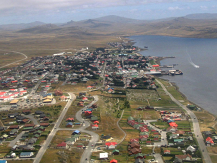
Stanley, Falkland Islands
Wikipedia
conditionally surrender
Wikipedia

Falklands War
Wikipedia
Argentina
Wikipedia

Stanley, Falkland Islands
Wikipedia

Surrender (military)
Wikipedia

Rendición argentina en las Malvinas
Wikipedia

Ministerio de Defensa (Argentina)
Wikipedia
Kapitulation
Wikipedia

Prisoner of war
Wikipedia
England
Wikipedia

Falkland Islands
Wikipedia
What Else Happened on June 14
début du siège de Nicée pendant la première croisade.
Henry the Lion established Munich by destroying a rival bridge to force merchant traffic through his own toll-paying settlement on the Isar. This calculated mov…
Mit Schiffen über den Tonle-Sap-See kommend, erobern die Cham die Hauptstadt des Khmer-Reiches von Angkor.
Half of England belonged to a French prince, and almost nobody stopped him. Louis of France crossed the Channel in 1216 at the invitation of English barons furi…
en Autillo de Campos, Fernando III es proclamado rey de Castilla para después ser coronado oficialmente en Valladolid.

The Song Dynasty crowned a seven-year-old emperor in a city they were already fleeing. Zhao Shi became Emperor Duanzong not in a palace but in exile, Fuzhou ser…
Talk to History
Have a conversation with historical figures who witnessed this era. Ask questions, explore perspectives, and bring history to life.