Whiskey Distilled from Corn: Bourbon's American Birth
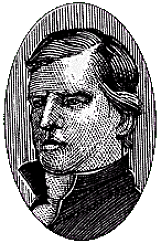
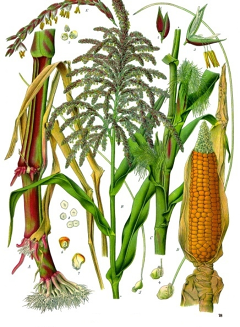
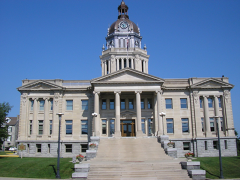
Reverend Elijah Craig is traditionally credited with distilling the first bourbon whiskey from corn in Georgetown, Kentucky, around 1789, though the claim has been disputed by historians for over a century. The association of Craig's name with bourbon's origin appears to date from an 1874 newspaper article, and no contemporary documents confirm that he was the first to age corn whiskey in charred oak barrels, the process that defines bourbon's distinctive flavor and amber color. What is less disputed is that corn-based whiskey production became widespread in Kentucky and neighboring states during the late eighteenth century. Scotch-Irish and German settlers brought distilling traditions to the frontier, where corn grew far more abundantly than the rye and barley used in Eastern whiskeys. Distilling was also a practical solution to transportation costs. A horse could carry roughly four bushels of corn to market, but the same horse could carry the equivalent of twenty-four bushels if the corn was first converted to whiskey. The name "bourbon" itself is contested. The most common theory links it to Bourbon County, Kentucky, where Craig lived and operated his distillery. Another theory holds that the whiskey was named for Bourbon Street in New Orleans, a major destination for Kentucky spirits shipped down the Ohio and Mississippi Rivers. Bourbon County was originally a vast territory that encompassed much of eastern Kentucky, so many early distillers technically operated within its borders. Congress declared bourbon a "distinctive product of the United States" in 1964, legally requiring that it be made from at least 51 percent corn, aged in new charred oak barrels, and produced in America. Kentucky today produces roughly 95 percent of the world's bourbon supply, an industry worth over $9 billion annually.
June 14, 1789
237 years ago
Key Figures & Places

What Else Happened on June 14
Henry the Lion established Munich by destroying a rival bridge to force merchant traffic through his own toll-paying settlement on the Isar. This calculated mov…
Half of England belonged to a French prince, and almost nobody stopped him. Louis of France crossed the Channel in 1216 at the invitation of English barons furi…
The Song Dynasty crowned a seven-year-old emperor in a city they were already fleeing. Zhao Shi became Emperor Duanzong not in a palace but in exile, Fuzhou ser…
Kublai Khan's navy never saw it coming. Prince Trần Quang Khải didn't wait for the Mongols to land — he hit them on the water at Chương Dương, where the fleet w…
Nayan thought the old blood still meant something. As a direct descendant of Genghis Khan's brothers, he commanded 60,000 warriors and believed Mongol tradition…
A fourteen-year-old boy rode out to meet an army. Richard II, barely a king, faced thousands of furious peasants at Blackheath while his advisors hid behind Tow…
Talk to History
Have a conversation with historical figures who witnessed this era. Ask questions, explore perspectives, and bring history to life.