Lafayette Lands in America: French Ally Joins the Revolution
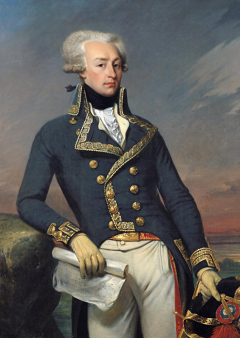
A nineteen-year-old French aristocrat stepped onto American soil near Georgetown, South Carolina, on June 13, 1777, having crossed the Atlantic at his own expense aboard a ship he had personally purchased. The Marquis de Lafayette had defied a direct order from King Louis XVI forbidding him to leave France, left behind a pregnant wife and immense family fortune, and sailed for two months to join a revolution in a country he had never visited. His motivations were a mix of genuine idealism, hunger for military glory, and personal spite toward Britain. Lafayette had been orphaned young and inherited an enormous estate that made him one of the wealthiest young men in France. His father had been killed by a British cannonball at the Battle of Minden in 1759, giving Lafayette a personal grievance against England. When Silas Deane, the American envoy in Paris, began recruiting European officers for the Continental Army, Lafayette volunteered enthusiastically. Congress, overwhelmed by European officers seeking commissions and pay, was initially reluctant to accept yet another foreign volunteer. Lafayette's willingness to serve without pay and his powerful French connections changed the equation. Congress commissioned him a major general on July 31, 1777, at age nineteen, making him one of the youngest generals in the Continental Army. George Washington, initially skeptical, quickly grew close to the young Frenchman, treating him almost as a surrogate son. Lafayette was wounded at the Battle of Brandywine in September 1777, served through the brutal winter at Valley Forge, and played a critical role at the Siege of Yorktown in 1781. His most lasting contribution was helping persuade France to enter the war formally, providing the military and naval support without which American independence would likely have been impossible. Lafayette returned to France a hero in both countries.
June 13, 1777
249 years ago
Key Figures & Places
What Else Happened on June 13
Two emperors who hated each other agreed on exactly one thing. Constantine and Licinius met in Milan in February 313, sealed a political marriage, and hammered …
He left home at 21 thinking he'd be back in a year. Ibn Battuta never returned. What started as a hajj to Mecca stretched into 75,000 miles across 44 modern cou…
The oldest military alliance still active today wasn't forged by grand diplomacy — it started as a transaction. England needed wool trade routes. Portugal neede…
Angry mobs led by Wat Tyler stormed and incinerated the Savoy Palace, the opulent London residence of John of Gaunt. By destroying the symbol of royal corruptio…
Henry VIII built the biggest warship on Earth and named it after God. Henry Grace à Dieu — "Henry, Grace of God" — wasn't subtle. At 1,500 tons and carrying 186…
Martin Luther married Katharina von Bora on June 13, 1525, in a ceremony at the Black Cloister in Wittenberg, directly defying the Roman Catholic Church's celib…
Talk to History
Have a conversation with historical figures who witnessed this era. Ask questions, explore perspectives, and bring history to life.