

British Declare Martial Law in Massachusetts: Bunker Hill Is Coming
British General Thomas Gage declared martial law in Massachusetts and offered amnesty to all colonists who surrendered their weapons, with two exceptions: Samuel Adams and John Hancock would be hanged if captured. The proclamation backfired spectacularly, inflaming colonial resistance and pushing undecided moderates toward the independence movement.
June 12, 1775
251 years ago
Key Figures & Places

Great Britain
Wikipedia
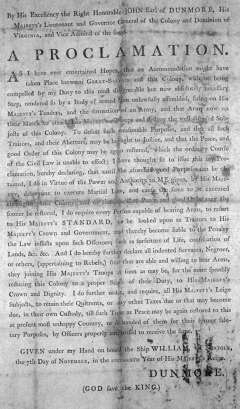
Martial law
Wikipedia
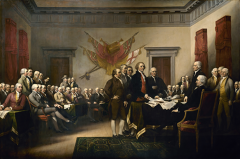
American Revolution
Wikipedia
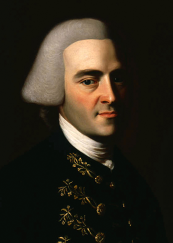
John Hancock
Wikipedia
British Army
Wikipedia
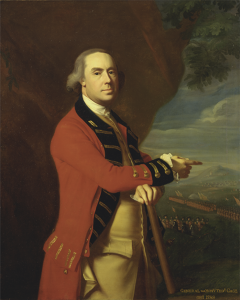
Thomas Gage
Wikipedia

Massachusetts Colony
Wikipedia
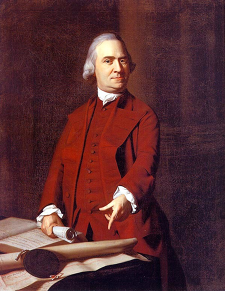
Samuel Adams
Wikipedia

American Revolutionary War
Wikipedia

British Army
Wikipedia

Thomas Gage
Wikipedia

Martial law
Wikipedia

Province of Massachusetts Bay
Wikipedia

Samuel Adams
Wikipedia

John Hancock
Wikipedia

American Revolution
Wikipedia

Massachusetts
Wikipedia

George Mason
Wikipedia
Virginia Declaration of Rights
Wikipedia
What Else Happened on June 12
The Hungarians were running away. That's what Louis the Child's army thought. They chased the retreating Magyar horsemen straight into a trap — and the East Fra…
Qutb ud-Din Aibak established the Delhi Sultanate after the assassination of his predecessor, Muhammad Ghori, shifting the center of Islamic political power fro…
A Christian monk walked into a debate he was guaranteed to win. Nicholas Donin had converted from Judaism and handed the Church a list of 35 charges against the…
el papa Bonifacio VIII nombra a Jaime II de Aragón rey de Cerdeña y Córcega.
Thousands of armed peasants converged on Blackheath, demanding an end to serfdom and the abolition of poll taxes that crippled the rural poor. This massive mobi…
The gates of Paris swung open from the inside. That's the part people miss — nobody stormed the city. A group of Burgundian sympathizers, led by agents of John …
Talk to History
Have a conversation with historical figures who witnessed this era. Ask questions, explore perspectives, and bring history to life.