Lidice Destroyed: Nazi Retaliation Turns Village to Ashes
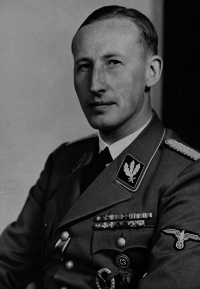
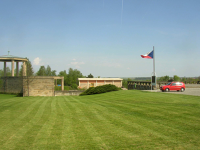
SS troops arrived in Lidice at dawn on June 10, 1942, and by the following morning, the Czech village had ceased to exist. Every man and boy over fifteen was shot. Every woman was deported to Ravensbruck concentration camp. Most of the children were gassed at the Chelmno extermination camp. The buildings were burned, dynamited, and bulldozed. Even the village cemetery was dug up. The Germans intended to erase Lidice from the map and from memory. They achieved the opposite. The massacre was retaliation for the assassination of Reinhard Heydrich, the Reich Protector of Bohemia and Moravia, who had been fatally wounded by Czech commandos in Prague on May 27 and died on June 4. Hitler ordered "blood revenge" against the Czech population. Gestapo investigators, acting on false intelligence extracted under torture, connected Lidice to the parachutists who carried out the killing. The connection was fabricated. The village’s only crime was that two of its young men had joined the Czech army in exile, a fact unrelated to the Heydrich operation. The execution proceeded methodically. The 173 men and boys were taken to the Horak family farm and shot in groups of five against a mattress-padded wall. The process took most of the day. The 184 women were loaded onto trucks and sent to Ravensbruck, where 53 died. Of the 105 children, 82 were gassed at Chelmno. Seventeen children who matched the Nazis’ Aryan racial criteria were placed with German families under new names. Only a handful were recovered after the war. The Nazis publicized the destruction of Lidice as a warning, and the propaganda backfired catastrophically. The atrocity generated global outrage. Towns in Mexico, Brazil, the United States, and Britain renamed themselves Lidice in solidarity. The name became a symbol of Nazi barbarism and Czech resilience. After the war, the Czechoslovak government rebuilt Lidice adjacent to the original site. A memorial rose garden containing 29,000 rose bushes, donated from 32 countries, now covers the ground where the old village stood.
June 10, 1942
84 years ago
Key Figures & Places

What Else Happened on June 10
Emperor Tenji installed a water clock called a Rokoku at the Omi Palace in Otsu on June 10, 671 AD, standardizing timekeeping across the Japanese imperial court…
Frederick I Barbarossa drowned in the Saleph River while leading his massive army toward Jerusalem, shattering the Holy Roman Empire’s momentum in the Third Cru…
Pope Honorius III issued the bull Vineae Domini custodes, formally authorizing Dominican friars to carry their missionary work to Morocco. The papal endorsement…
Ottoman forces under Orhan Gazi crushed the Byzantine army at the Battle of Pelekanon, ending imperial control over Bithynia. This defeat stripped Constantinopl…
An empire lost Asia Minor not in a great clash of armies, but in a single afternoon's retreat. At Pelekanon, near Nicomedia, Emperor Andronikos III faced the Ot…
Peasants nearly took France. Not metaphorically — they burned castles, killed nobles, and sent the aristocracy fleeing for their lives. The Jacquerie uprising o…
Talk to History
Have a conversation with historical figures who witnessed this era. Ask questions, explore perspectives, and bring history to life.