Allies Invade Levant: Securing the Middle East Front
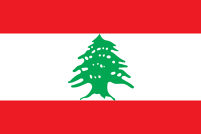
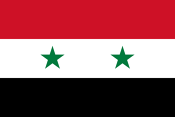
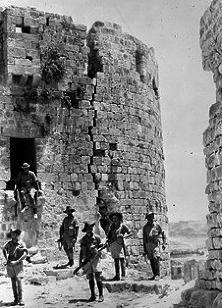
British, Australian, Indian, and Free French forces crossed the border into Vichy French-held Syria and Lebanon on June 8, 1941, in Operation Exporter. The invasion was ordered to prevent Nazi Germany from using the Levant as a staging ground for attacks on the Suez Canal and British-controlled Iraq. Vichy French forces, numbering roughly 45,000, fought back with unexpected ferocity. What the Allies had expected to be a brief campaign lasted five weeks and cost over 4,600 Allied casualties. The political context was tangled. France had fallen to Germany in June 1940, and the Vichy government controlled France’s overseas colonies under a collaborationist arrangement with Berlin. Syria and Lebanon, administered by France under a League of Nations mandate since 1920, remained loyal to Vichy. In May 1941, German aircraft used Syrian airfields to supply an anti-British coup in Iraq, and Vichy High Commissioner Henri Dentz permitted German and Italian planes to refuel at Syrian bases. Britain could not tolerate an Axis presence on the eastern Mediterranean flank. The fighting was bitter and politically uncomfortable. Free French forces under General Paul Legentilhomme fought Vichy French troops in engagements where both sides spoke the same language, wore similar uniforms, and had served together before the fall of France. Australian troops suffered heavy casualties at the Litani River crossing and in the drive toward Beirut. The Royal Navy clashed with Vichy destroyers off the coast, sinking two. Damascus fell on June 21 after fierce resistance. Beirut was surrounded by July 9. The Vichy garrison requested an armistice on July 12, ending the campaign. Under the armistice terms, Vichy soldiers were given the choice of joining the Free French or repatriation to France. The vast majority chose repatriation, a humiliation for Charles de Gaulle. Syria and Lebanon were placed under Free French administration, with British promises of eventual independence that De Gaulle resented and resisted. Lebanon declared independence in 1943; Syria followed in 1946. Both dates marked the beginning of the end of French influence in the Middle East.
June 8, 1941
85 years ago
Key Figures & Places
What Else Happened on June 8
Galba was 70 years old when the Senate handed him Rome. Seventy. The oldest man to ever take the throne, and he knew it. He'd spent decades as a loyal general, …
The teenage priest Elagabalus, backed by his grandmother's gold and the loyalty of Syrian legions, defeated Emperor Macrinus outside Antioch after Macrinus's ow…
Attila the Hun breached the Alps and descended upon northern Italy, systematically dismantling cities like Aquileia to force a Roman surrender. This campaign cr…
The Prophet Muhammad died on June 8, 632 AD, in the arms of his wife Aisha in Medina, and the community he had built nearly tore itself apart over the question …
The monks never saw them coming — because no one thought the sea was a threat. Lindisfarne's abbey sat on a tidal island off Northumbria's coast, seemingly prot…
Harthacnut collapsed and died during a wedding feast, ending his brief, unpopular reign over England. His sudden death triggered an immediate succession crisis …
Talk to History
Have a conversation with historical figures who witnessed this era. Ask questions, explore perspectives, and bring history to life.