Stonewall Jackson Wins Cross Keys: Confederate Army Saved
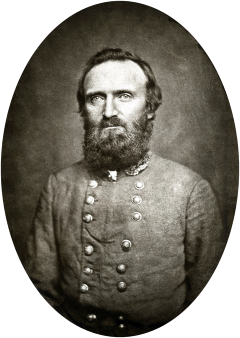
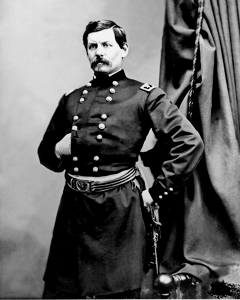
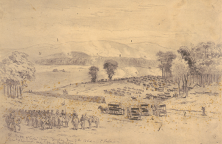
Stonewall Jackson’s Shenandoah Valley Campaign was a masterclass in using speed to defeat superior numbers. At the Battle of Cross Keys on June 8, 1862, Confederate forces under General Richard Ewell held off a Union advance by General John C. Fremont near Harrisonburg, Virginia, buying Jackson the time he needed to concentrate his scattered forces. The engagement was the second-to-last battle in a campaign that had pinned down 60,000 Union troops with an army of 17,000. Jackson had spent the previous month marching his infantry so relentlessly that they earned the nickname "foot cavalry." In thirty days, they covered nearly 400 miles through the Shenandoah Valley, fighting and winning five battles against three separate Union forces. The campaign’s objective was not to conquer territory but to prevent Union reinforcements from reaching General George McClellan, who was advancing on Richmond with the Army of the Potomac. Every Federal soldier chasing Jackson through the Valley was a soldier unavailable for the Peninsula Campaign. At Cross Keys, Ewell positioned his 5,000 men on a ridge south of the village and waited for Fremont’s 10,500-man force to attack. Fremont advanced cautiously, sending his brigades forward piecemeal rather than in a coordinated assault. General Isaac Trimble’s Confederate brigade counterattacked on the Union left, driving the Federals back and capturing a battery of artillery. Fremont, unnerved by the resistance, suspended his advance and did not renew the fight. The following day, Jackson defeated a second Union force under General James Shields at the Battle of Port Republic, then slipped his army out of the Valley and marched east to join General Robert E. Lee for the Seven Days Battles outside Richmond. The Valley Campaign achieved everything Lee needed. McClellan’s reinforcements never arrived, the Peninsula Campaign stalled, and Jackson emerged as the most feared commander in the Confederate army. Cross Keys was a holding action fought by a subordinate, but it was essential to the campaign’s success.
June 8, 1862
164 years ago
Key Figures & Places

What Else Happened on June 8
Galba was 70 years old when the Senate handed him Rome. Seventy. The oldest man to ever take the throne, and he knew it. He'd spent decades as a loyal general, …
The teenage priest Elagabalus, backed by his grandmother's gold and the loyalty of Syrian legions, defeated Emperor Macrinus outside Antioch after Macrinus's ow…
Attila the Hun breached the Alps and descended upon northern Italy, systematically dismantling cities like Aquileia to force a Roman surrender. This campaign cr…
The Prophet Muhammad died on June 8, 632 AD, in the arms of his wife Aisha in Medina, and the community he had built nearly tore itself apart over the question …
The monks never saw them coming — because no one thought the sea was a threat. Lindisfarne's abbey sat on a tidal island off Northumbria's coast, seemingly prot…
Harthacnut collapsed and died during a wedding feast, ending his brief, unpopular reign over England. His sudden death triggered an immediate succession crisis …
Talk to History
Have a conversation with historical figures who witnessed this era. Ask questions, explore perspectives, and bring history to life.