

Israel Destroys Iraqi Reactor: Nuclear Threat Eliminated
Eight Israeli F-16 fighter jets, each carrying two unguided 2,000-pound bombs, flew over Saudi Arabia and Jordanian airspace at treetop altitude to avoid radar detection. On June 7, 1981, they destroyed Iraq’s Osirak nuclear reactor at the Tuwaitha Nuclear Research Center, seventeen kilometers southeast of Baghdad. The strike lasted less than two minutes. All eight pilots returned safely. Ten Iraqi soldiers and one French technician were killed. The Osirak reactor, formally named Tammuz-1, was a 40-megawatt research reactor sold to Iraq by France in 1975 under a deal brokered by Prime Minister Jacques Chirac. Israel’s intelligence services concluded that Iraqi President Saddam Hussein intended to use the reactor to produce weapons-grade plutonium. Iraq insisted the facility was for peaceful energy research. The reactor was fueled with highly enriched uranium, which was unusual for a research facility and gave weight to Israeli concerns, though the design would have required significant modification to produce bomb material efficiently. Prime Minister Menachem Begin authorized the strike over the objections of opposition leader Shimon Peres and several members of his own cabinet. The timing was driven by the reactor’s imminent completion: once fuel rods were loaded, destroying the reactor would scatter radioactive material across Baghdad. Israeli pilots trained for months on mock-ups in the Negev Desert, rehearsing the exact flight path over hostile airspace. The mission, code-named Operation Opera, required aerial refueling and precise navigation across 1,000 kilometers of foreign territory. International condemnation was unanimous. The United Nations Security Council passed Resolution 487 condemning the attack. The United States temporarily suspended delivery of F-16 aircraft to Israel. France called it unacceptable aggression. Over the following decades, the consensus shifted. After the 1991 Gulf War revealed that Iraq had been pursuing nuclear weapons through multiple secret programs, the Osirak strike was increasingly cited as a model of preventive military action. The doctrine it established, that a state may use force to prevent a hostile nation from acquiring nuclear weapons, remains one of the most contentious principles in international security.
June 7, 1981
45 years ago
Key Figures & Places

Iraq
Wikipedia
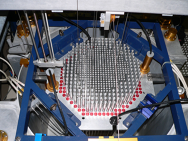
nuclear reactor
Wikipedia
Israeli Air Force
Wikipedia
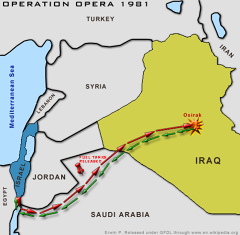
Osiraq
Wikipedia
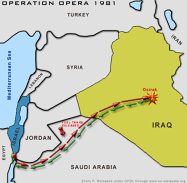
Operation Opera
Wikipedia
nuclear weapons
Wikipedia

Israeli Air Force
Wikipedia

Iraq
Wikipedia

Nuclear reactor
Wikipedia
Operation Opera
Wikipedia

Osirak
Wikipedia

Israel Defense Forces
Wikipedia

Journée de Jérusalem
Wikipedia

Six-Day War
Wikipedia
What Else Happened on June 7
She was a pagan poet's daughter from Athens — and she almost didn't make it to Constantinople at all. Theodosius II's sister Pulcheria, who effectively ran the …
Pope John VIII officially recognized Duke Branimir’s rule, granting Croatia formal status as an independent state. By securing this papal blessing, Branimir suc…
Henry II ascended the German throne, consolidating power after the sudden death of his cousin, Emperor Otto III. By securing the loyalty of the German nobility,…
The city hadn't had rain in weeks. Crusader soldiers were dying of thirst outside Jerusalem's walls in the summer of 1099, some drinking their own horses' blood…
The First Crusade's siege of Jerusalem began on June 7, 1099, with barely 1,500 knights and 12,000 foot soldiers remaining from the original force of approximat…
Friuli had outlasted Rome's collapse, survived barbarian migrations, and held itself together for centuries under the Patriarch of Aquileia. Then Venice sent tr…
Talk to History
Have a conversation with historical figures who witnessed this era. Ask questions, explore perspectives, and bring history to life.