Rome Falls to Allies: First Axis Capital Liberated
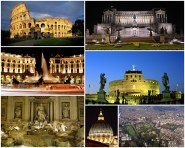
American troops entered Rome on June 4, 1944, and the city barely noticed the war was over. There was no climactic battle. German forces under Field Marshal Albert Kesselring had already begun withdrawing northward to the Gothic Line, and the population greeted the liberators with wine, flowers, and a relief that bordered on indifference. Rome became the first Axis capital to fall in World War II, yet the achievement was overshadowed within 48 hours by an event of far greater consequence. The campaign to reach Rome had been grinding and bloody. Allied forces had landed at Anzio in January 1944, expecting a quick thrust to the capital, but four months of trench warfare on the beachhead produced 43,000 Allied casualties and virtually no territorial gain. The monastery at Monte Cassino, blocking the road to Rome, required four separate assaults and the controversial destruction of one of Europe’s oldest religious sites before the German defensive line broke in May. General Mark Clark, commanding the U.S. Fifth Army, diverted his forces to capture Rome instead of cutting off the retreating German Tenth Army, a decision that infuriated British commanders and likely prolonged the Italian campaign by months. Clark wanted the glory of liberating the Eternal City. He got his photograph in front of the Colosseum and a brief burst of headlines before the world’s attention moved decisively to Normandy. D-Day landed on June 6, two days after Rome’s liberation, and immediately reduced the Italian theater to a sideshow. Churchill had called Italy the "soft underbelly" of Europe; it had proved anything but. The Italian campaign continued for nearly another year, tying down German divisions but never achieving the strategic breakthrough its architects had promised. Clark’s capture of Rome remains one of the war’s most pyrrhic victories: a prize won at enormous cost and forgotten almost immediately.
June 4, 1944
82 years ago
Key Figures & Places
What Else Happened on June 4
Chinese astronomers already knew it was coming. They'd tracked the sun for generations, mapped its moods, built careers on predicting its behavior. But when the…
Henry III was 22 years old when he inherited an empire stretching from Denmark to southern Italy — and he actually made it work. His father Conrad II left him a…
The world's first food monopoly wasn't wine. Wasn't bread. It was mold. King Charles VI handed the village of Roquefort-sur-Soulzon exclusive rights to ripen th…
Villagers from Kent and Sussex stormed Bayham Abbey and occupied it for a week, protesting Cardinal Wolsey's order to dissolve the monastery and redirect its we…
Lightning hit St Paul's steeple on a June afternoon and within hours, 500 years of medieval stonework were gone. The blaze burned so hot that molten lead from t…
The colony was gone before anyone could explain it. Raleigh never actually set foot on Roanoke Island — he funded the 1584 expedition but stayed in England, sen…
Talk to History
Have a conversation with historical figures who witnessed this era. Ask questions, explore perspectives, and bring history to life.