

Ixtoc I Blows Out: Gulf's Worst Spill Begins
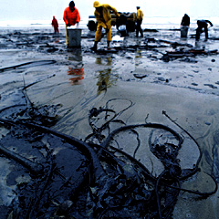
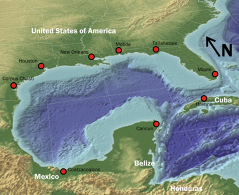
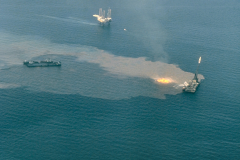
Drilling mud stopped circulating at 3:00 AM, and the crew of the Sedco 135F knew they were in trouble. The exploratory well Ixtoc I, operated by Mexico’s state oil company Pemex in the Bay of Campeche 600 miles south of Texas, blew out on June 3, 1979, when pressurized oil and gas roared up the wellbore and ignited. The drilling rig collapsed into the sea. The well would not be capped for nine months. Ixtoc I released an estimated 3.3 million barrels of crude oil into the Gulf of Mexico, making it the second-largest accidental oil spill in history at the time. Oil slicks spread across 1,100 square miles. Prevailing currents carried crude northward to the Texas coastline, where tar balls fouled 162 miles of beaches from the Rio Grande to Corpus Christi. Mexican shrimpers and fishermen lost an entire season’s income. Sea turtles, dolphins, and seabird populations suffered losses that scientists struggled to quantify because baseline population data barely existed. Pemex attempted every available technique to stop the flow. Workers dropped steel balls and debris into the wellbore, injected chemical gelling agents, and used relief wells to intersect the blown-out shaft. Two relief wells were drilled simultaneously starting in June, but the geology of the seafloor complicated the drilling. Oil continued to pour out at a rate of 10,000 to 30,000 barrels per day throughout the summer and fall. The well was finally capped on March 23, 1980, 295 days after the blowout. The disaster produced recommendations for blowout prevention that went largely unimplemented. Thirty-one years later, the Deepwater Horizon spill in the same Gulf of Mexico repeated many of the same failures at far greater depth, suggesting that the lessons of Ixtoc I were studied but never absorbed by the industry.
June 3, 1979
47 years ago
Key Figures & Places
What Else Happened on June 3
Gladiators stormed the gates of Rome on June 3, 350 AD, and for 28 days that was actually enough to seize power. Flavius Popilius Nepotianus, a nephew of Empero…
Philippicus never saw it coming — literally. The Opsikion soldiers who seized him in Thrace didn't just remove him from power; they gouged out his eyes, the Byz…
Crusaders breached the walls of Antioch after an exhausting eight-month siege, ending months of starvation and stalemate. This victory secured a vital foothold …
Antioch didn't fall to swords — it fell to a traitor. A Armenian tower guard named Firouz, bitter over a cheese dispute with his commander, secretly opened the …
The Council of Sens condemned Peter Abelard’s theological writings as heretical after Bernard of Clairvaux successfully campaigned against his rationalist appro…
Norway and the Novgorod Republic formalized their northern frontier in Finnmark, ending decades of violent territorial skirmishes over tax collection rights. By…
Talk to History
Have a conversation with historical figures who witnessed this era. Ask questions, explore perspectives, and bring history to life.