White Walks Space: America's First EVA
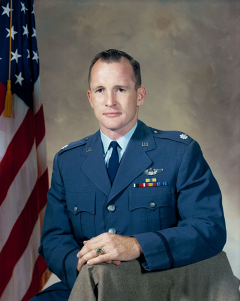
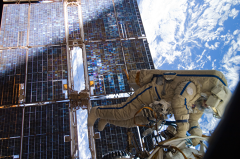
Ed White refused to come back inside. Floating above the Pacific Ocean at 17,500 miles per hour, tethered to the Gemini 4 capsule by a 25-foot gold-wrapped umbilical cord, the Air Force lieutenant colonel was having the time of his life. When mission control in Houston ordered him to end America’s first spacewalk after 23 minutes, White radioed back: "This is the saddest moment of my life." NASA had accelerated the spacewalk after Soviet cosmonaut Alexei Leonov completed the first EVA on March 18, 1965, beating the Americans by less than three months. Gemini 4 launched on June 3, 1965, and White exited the capsule during the third orbit, propelling himself with a handheld zip gun that fired bursts of compressed oxygen. He tumbled, spun, and grinned through a visor fogged with exertion while his crewmate James McDivitt struggled to photograph him through the capsule window. The mission proved that humans could function outside a spacecraft, a prerequisite for the lunar program that was only four years from its deadline. White demonstrated that an astronaut could maintain orientation, manipulate tools, and perform basic tasks in the vacuum of space without immediate physical collapse. The zip gun ran out of propellant after three minutes, forcing White to pull himself along the tether for the remainder of the walk, but the fundamental question was answered: extravehicular activity was survivable and productive. White died less than two years later in the Apollo 1 fire on January 27, 1967, trapped inside a command module with Gus Grissom and Roger Chaffee during a launch pad test. He was 36. The redesigned Apollo capsule that emerged from the disaster investigation carried the program safely to the moon, a destination White had been selected to visit.
June 3, 1965
61 years ago
Key Figures & Places
What Else Happened on June 3
Gladiators stormed the gates of Rome on June 3, 350 AD, and for 28 days that was actually enough to seize power. Flavius Popilius Nepotianus, a nephew of Empero…
Philippicus never saw it coming — literally. The Opsikion soldiers who seized him in Thrace didn't just remove him from power; they gouged out his eyes, the Byz…
Crusaders breached the walls of Antioch after an exhausting eight-month siege, ending months of starvation and stalemate. This victory secured a vital foothold …
Antioch didn't fall to swords — it fell to a traitor. A Armenian tower guard named Firouz, bitter over a cheese dispute with his commander, secretly opened the …
The Council of Sens condemned Peter Abelard’s theological writings as heretical after Bernard of Clairvaux successfully campaigned against his rationalist appro…
Norway and the Novgorod Republic formalized their northern frontier in Finnmark, ending decades of violent territorial skirmishes over tax collection rights. By…
Talk to History
Have a conversation with historical figures who witnessed this era. Ask questions, explore perspectives, and bring history to life.