Long Wires Carry Power: The Grid Is Born
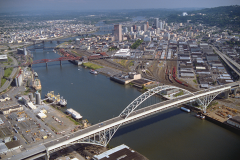
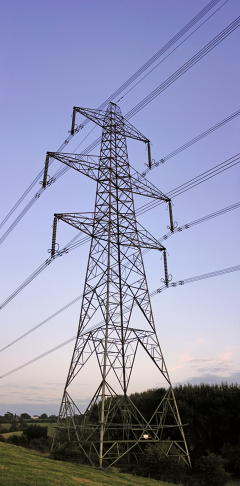
Fourteen miles of wire strung between a waterfall and a city changed how civilization used energy. On June 3, 1889, the first long-distance commercial electrical power transmission line in the United States began operating, carrying current generated at Willamette Falls in Oregon City to streetlights and businesses in downtown Portland. The project proved that electricity did not have to be consumed where it was produced. The challenge was distance. Thomas Edison’s direct current systems, which powered lower Manhattan, lost so much energy over wire that generating stations had to sit within a mile of their customers. Every city block needed its own small power plant. The Willamette Falls project used direct current at 4,000 volts, far higher than Edison’s standard, transmitted over telegraph-style poles. Even at that voltage, losses were significant, and the system could deliver only about 185 horsepower to Portland. The real breakthrough was already underway elsewhere. George Westinghouse and Nikola Tesla were developing alternating current systems that used transformers to step voltage up for long-distance transmission and down again for safe use in homes and factories. AC could travel hundreds of miles with acceptable losses. The Willamette Falls line demonstrated the demand for long-distance power, but it was AC technology, proven at the 1893 Chicago World’s Fair and the 1895 Niagara Falls generating station, that made the modern electrical grid possible. Portland’s modest fourteen-mile line nonetheless established the principle that shaped the twentieth century: energy could be generated wherever geography provided the cheapest fuel or water, then shipped invisibly to wherever people needed it. Factories no longer required riverside locations. Cities could grow without choking on coal smoke. The separation of power generation from power consumption remade the geography of industrial civilization.
June 3, 1889
137 years ago
Key Figures & Places
What Else Happened on June 3
Gladiators stormed the gates of Rome on June 3, 350 AD, and for 28 days that was actually enough to seize power. Flavius Popilius Nepotianus, a nephew of Empero…
Philippicus never saw it coming — literally. The Opsikion soldiers who seized him in Thrace didn't just remove him from power; they gouged out his eyes, the Byz…
Crusaders breached the walls of Antioch after an exhausting eight-month siege, ending months of starvation and stalemate. This victory secured a vital foothold …
Antioch didn't fall to swords — it fell to a traitor. A Armenian tower guard named Firouz, bitter over a cheese dispute with his commander, secretly opened the …
The Council of Sens condemned Peter Abelard’s theological writings as heretical after Bernard of Clairvaux successfully campaigned against his rationalist appro…
Norway and the Novgorod Republic formalized their northern frontier in Finnmark, ending decades of violent territorial skirmishes over tax collection rights. By…
Talk to History
Have a conversation with historical figures who witnessed this era. Ask questions, explore perspectives, and bring history to life.