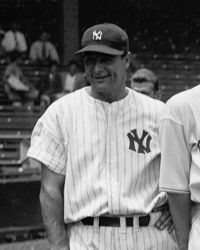
Lou Gehrig's Streak Begins: 2,130 Games Played
Nobody noticed when it started. Lou Gehrig entered the game as a pinch hitter for shortstop Pee Wee Wanninger on June 1, 1925, a routine substitution on a struggling Yankees club that barely registered in the next day’s box scores. The following day, manager Miller Huggins put him at first base in place of Wally Pipp, who was nursing a headache. Gehrig would not leave the lineup for fourteen years. The consecutive games streak reached 2,130 and became the most revered record in baseball, a monument to physical durability that seemed as permanent as the sport itself. Gehrig played through broken fingers, back spasms, and beanballs to the head. X-rays taken late in his career revealed seventeen fractures in his hands that had healed on their own because he never took a day off to let them set properly. His teammates called him the Iron Horse, and opposing pitchers learned that Gehrig on a bad day was still more dangerous than most hitters at their best. The streak ended on May 2, 1939, when Gehrig pulled himself from the lineup in Detroit. His batting average had collapsed, he was stumbling on the field, and teammates had begun congratulating him on routine plays. Doctors at the Mayo Clinic diagnosed amyotrophic lateral sclerosis, a progressive neurodegenerative disease that now bears his name. He was thirty-five years old. Gehrig’s farewell speech at Yankee Stadium on July 4, 1939, remains one of the most famous moments in American sports. Standing at home plate, already visibly weakened, he told 61,808 fans he considered himself the luckiest man on the face of the earth. He died less than two years later. Cal Ripken Jr. broke the consecutive games record in 1995, but the streak remains inseparable from the man who lost everything except his dignity.
June 1, 1925
101 years ago
Key Figures & Places

What Else Happened on June 1
Praetorian guards executed Didius Julianus in his palace just sixty-six days after he purchased the Roman throne at an auction. His violent end cleared the path…
Hugh Capet wasn't supposed to last. The Carolingian dynasty had ruled France for two centuries, and the nobles who elected Hugh in 987 figured he'd be easy to c…
Rouen didn't fall to a siege. It surrendered because its English defenders simply left. King Philip II Augustus had spent years dismantling the Angevin empire p…
Genghis Khan didn't destroy Zhongdu — he waited. For two years, his forces strangled the city's supply lines until Emperor Xuanzong fled south, abandoning his o…
Alfonso X ascended the throne of Castile and León, inheriting a kingdom poised for expansion. His reign transformed the Iberian Peninsula by codifying the Siete…
The Livonian Order had conquered the Baltic for over a century — crusading knights, fortified castles, total dominance. Then Turaida happened. In 1298, an allia…
Talk to History
Have a conversation with historical figures who witnessed this era. Ask questions, explore perspectives, and bring history to life.