North Magnetic Pole Found: Earth's Hidden Compass Revealed
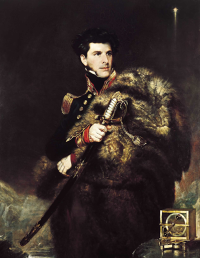
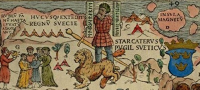
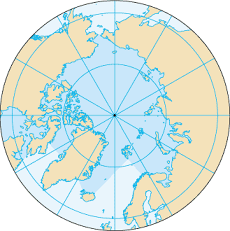
A compass needle pointed straight down into the frozen ground, and James Clark Ross knew he was standing on something no human had found before. On June 1, 1831, during a four-year expedition to chart the Northwest Passage, the 30-year-old British naval officer located the North Magnetic Pole on the western coast of the Boothia Peninsula in Arctic Canada. His compass dipped to 89 degrees and 59 minutes of vertical, confirming the theoretical position where Earth’s magnetic field lines converge. Ross had traveled with his uncle, Captain John Ross, aboard the steam-powered Victory. The expedition was privately funded after the British Admiralty refused to support it, a decision that left the crew marooned in Arctic ice for four winters. While trapped, the younger Ross made dozens of overland sledge journeys to map the surrounding territory, and it was on one of these treks that he reached the magnetic pole at Cape Adelaide. The discovery resolved a scientific debate stretching back to William Gilbert’s 1600 treatise De Magnete. Navigators had known for centuries that compass needles did not point to true north, but the location of the magnetic pole had remained a matter of speculation and mathematical extrapolation. Ross planted a British flag and built a cairn of limestone, then observed that his horizontal compass needle spun freely in every direction, confirming he had reached the exact spot. The magnetic pole does not stay put. It drifts constantly as molten iron flows shift deep in Earth’s core, moving roughly 55 kilometers per year. By 2020, it had migrated from Canada across the Arctic Ocean toward Siberia, forcing aviation authorities to regularly update their navigational charts. Ross’s cairn now sits hundreds of miles from the pole it once marked.
June 1, 1831
195 years ago
Key Figures & Places
What Else Happened on June 1
Praetorian guards executed Didius Julianus in his palace just sixty-six days after he purchased the Roman throne at an auction. His violent end cleared the path…
Hugh Capet wasn't supposed to last. The Carolingian dynasty had ruled France for two centuries, and the nobles who elected Hugh in 987 figured he'd be easy to c…
Rouen didn't fall to a siege. It surrendered because its English defenders simply left. King Philip II Augustus had spent years dismantling the Angevin empire p…
Genghis Khan didn't destroy Zhongdu — he waited. For two years, his forces strangled the city's supply lines until Emperor Xuanzong fled south, abandoning his o…
Alfonso X ascended the throne of Castile and León, inheriting a kingdom poised for expansion. His reign transformed the Iberian Peninsula by codifying the Siete…
The Livonian Order had conquered the Baltic for over a century — crusading knights, fortified castles, total dominance. Then Turaida happened. In 1298, an allia…
Talk to History
Have a conversation with historical figures who witnessed this era. Ask questions, explore perspectives, and bring history to life.