

Battle of Seven Pines: McClellan Nearly Takes Richmond
Confederate forces under Joseph E. Johnston attacked McClellan's Army of the Potomac at Seven Pines, just five miles from Richmond, in a chaotic two-day battle that cost 11,000 casualties on both sides. Johnston's wounding during the fight led Jefferson Davis to appoint Robert E. Lee as his replacement, a command change that transformed the Confederate war effort for the next three years.
May 31, 1862
164 years ago
Key Figures & Places
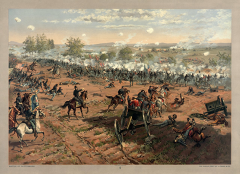
American Civil War
Wikipedia
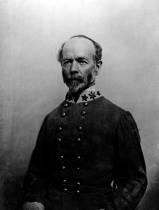
Joseph E. Johnston
Wikipedia
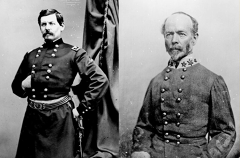
Peninsula Campaign
Wikipedia
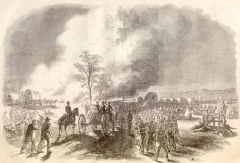
Battle of Seven Pines
Wikipedia
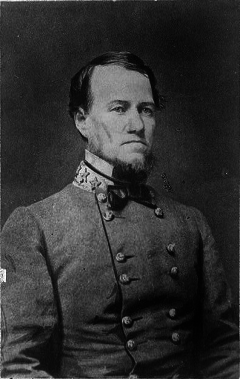
Gustavus Woodson Smith
Wikipedia
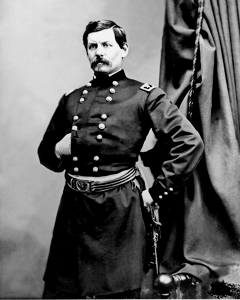
George B. McClellan
Wikipedia

American Civil War
Wikipedia

Peninsula campaign
Wikipedia

Joseph E. Johnston
Wikipedia

Gustavus Woodson Smith
Wikipedia

Battle of Seven Pines
Wikipedia

George B. McClellan
Wikipedia

Richmond, Virginia
Wikipedia
What Else Happened on May 31

Ramesses II seized the throne in 1279 BC and immediately launched a massive building campaign that reshaped the Egyptian landscape from Abu Simbel to Karnak. Hi…
An enraged Roman mob intercepted Emperor Petronius Maximus as he attempted to flee the city, stoning him to death in the streets. His brutal execution left the …
The ground shook for eighteen months straight afterward. That's what survivors remembered most about the 526 Antioch quake—not just the initial terror when buil…
The Mongols didn't just take Zhongdu—they waited. For a year. Genghis Khan's forces surrounded the Jin capital while its million inhabitants starved inside wall…

The Rus princes couldn't agree on a battle plan, so they didn't share one. At the Kalka River in 1223, Subutai's Mongol scouts pretended to retreat for nine day…
Mongol forces retreated from Java after Raden Wijaya tricked them into attacking his rivals, ending Kublai Khan’s attempt to subjugate the island. This tactical…
Talk to History
Have a conversation with historical figures who witnessed this era. Ask questions, explore perspectives, and bring history to life.