Jackson Signs Removal Act: The Trail of Tears Begins
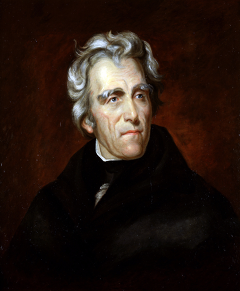
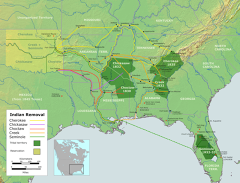
Andrew Jackson signed away the homelands of 60,000 people with a stroke of a pen. On May 28, 1830, the Indian Removal Act became law, authorizing the president to negotiate treaties that would relocate Native American nations from their ancestral lands in the southeastern United States to territory west of the Mississippi River. The word "negotiate" was a formality; the relocations would happen by force. The Act targeted the Cherokee, Chickasaw, Choctaw, Creek, and Seminole nations, peoples who had built towns, written constitutions, published newspapers, and operated farms and plantations across Georgia, Alabama, Mississippi, and Florida. American settlers wanted the land. Southern states, particularly Georgia, had been pressuring the federal government for removal, and Jackson, a frontier general who had fought the Creek War, was sympathetic. The Cherokee fought back through the legal system. In Worcester v. Georgia (1832), the Supreme Court ruled that the state of Georgia had no authority over Cherokee lands. Jackson is apocryphally quoted as saying, "John Marshall has made his decision; now let him enforce it." Whether or not he said the words, he ignored the ruling. Between 1831 and 1839, approximately 60,000 Native Americans were forced to march westward to Indian Territory in present-day Oklahoma. The Cherokee removal of 1838-39, known as the Trail of Tears, killed an estimated 4,000 of the 15,000 Cherokee who made the journey. Disease, starvation, and exposure claimed lives on every removal march. The Seminoles refused to go and fought two wars before a remnant was forcibly relocated. The Indian Removal Act remains one of the most consequential and controversial laws in American history, a legal mechanism for ethnic cleansing that opened 25 million acres of land to white settlement and cotton cultivation.
May 26, 1830
196 years ago
Key Figures & Places

What Else Happened on May 26
Cassius wanted to kill Caesar in Tarsus. Not on the Ides of March. Not in Rome. Here, in this dusty Cilician city where Caesar stopped to gather supplies before…
Germanicus paraded 50,000 captured Germans through Rome's streets, along with their chiefs in chains—tribes who'd annihilated three Roman legions just a decade …
The Armenians lost every tactical objective at Avarayr—outnumbered, outflanked, their commander Vardan Mamikonian dead on the field. But here's what's strange: …
Michael III crowned the man who would murder him. In 866, the Byzantine emperor elevated Basil—a peasant wrestler from Macedonia who'd charmed his way into the …
King Edmund I wasn't killed in battle or poisoned by rivals. He died breaking up a brawl at a feast in Pucklechurch. The king recognized an outlaw named Leofa a…
King Edmund I lunged at an outlaw during a feast at Pucklechurch, only to be stabbed to death by the man he sought to eject. His sudden demise triggered a succe…
Talk to History
Have a conversation with historical figures who witnessed this era. Ask questions, explore perspectives, and bring history to life.