

What Hath God Wrought: Morse Sends the First Telegraph Message
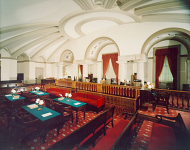
Samuel Morse fired the first telegraph message "What hath God wrought" from Washington's Old Supreme Court Chamber to Baltimore, instantly collapsing communication distances that had previously taken days or weeks. This transmission proved the electric wire could carry human language across vast stretches of land, birthing a global network that would soon shrink the world and redefine commerce, journalism, and warfare.
May 24, 1844
182 years ago
Key Figures & Places
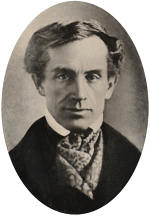
Samuel Morse
Wikipedia
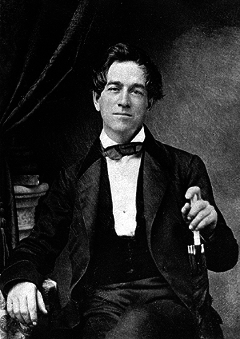
Alfred Vail
Wikipedia

Telegraphy
Wikipedia
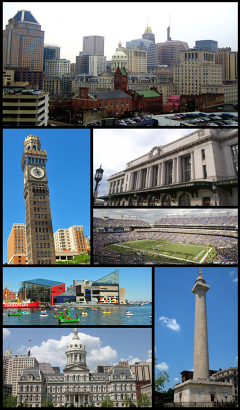
Baltimore
Wikipedia

United States Capitol
Wikipedia

Maryland
Wikipedia
Samuel F. B. Morse
Wikipedia
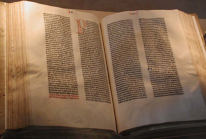
Bible
Wikipedia
Book of Numbers
Wikipedia
Old Supreme Court Chamber
Wikipedia

Samuel Morse
Wikipedia

Bible
Wikipedia

Book of Numbers
Wikipedia

United States Capitol
Wikipedia

Alfred Vail
Wikipedia

Baltimore
Wikipedia

Maryland
Wikipedia

Telegraphy
Wikipedia

Telegram
Wikipedia

Morse code
Wikipedia

Baltimore and Ohio Railroad
Wikipedia

Ellicott City, Maryland
Wikipedia

United States
Wikipedia

Washington (state)
Wikipedia

تشارلز كلارك
Wikipedia
What Else Happened on May 24
احتراق معبد هوريو-جي بالكامل.
bataille de Blain, victoire des troupes bretonnes de Nominoë sur les troupes franques du roi de Francie occidentale Charles II dit le chauve petit-fils de Charl…
الحصول على الموافقة الإمبراطورية بكتابة كوكين واكاشو.
They caught him hunting when the messengers arrived. Henry the Fowler was setting bird traps in the Harz Mountains—literally fowling—when Saxon nobles found him…
élection du pape Victor III.
Der Babenberger Herzog Leopold V. von Österreich und sein Sohn Friedrich erhalten nach dem Tod des letzten Traungauers Ottokar IV. von Kaiser Heinrich VI. auf B…
Talk to History
Have a conversation with historical figures who witnessed this era. Ask questions, explore perspectives, and bring history to life.