

Great Wagon Train of 1843: 1,000 Pioneers Head to Oregon
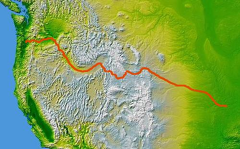
Seven hundred emigrants pushed their wagons through Oregon's Blue Mountains, defying Hudson's Bay Company agents who urged them to abandon their vehicles. Marcus Whitman led this bold charge, proving settlers could clear a path where others saw only impassable timber. Their arrival established the first continuous wagon trail from Missouri to The Dalles, paving the way for 2,000 miles of settlement by 1846.
May 22, 1843
183 years ago
Key Figures & Places


What Else Happened on May 22

Alexander watched twenty-five of his Companion Cavalry drown in the Granicus River before the real fighting even started. The Persians held the high bank—textbo…
en China se registra una lluvia de meteoritos: «Cayeron meteoritos, algunos grandes como palanganas y otros como huevos de gallina. Recién cesaron al atardecer»…
Lü Bu rode his legendary horse Red Hare straight into the throne room with a spear. His adopted father Dong Zhuo had grown so fat from two years of tyrannical r…
The comet came back exactly when Edmund Halley said it would—seventy-six years after his death. He'd spent decades calculating orbits, staking his reputation on…
Byzantine forces launched a surprise amphibious assault on Damietta, burning the Egyptian port to the ground and seizing vast stockpiles of weaponry intended fo…
Benedikt V. folgt als von den Römern gewählter Papst auf den verstorbenen Johannes XII. Kaiser Otto I. betreibt seine Absetzung. Rund einen Monat später wird de…
Talk to History
Have a conversation with historical figures who witnessed this era. Ask questions, explore perspectives, and bring history to life.