Shakespeare's Sonnets Published: The Bard's Poetic Legacy Revealed
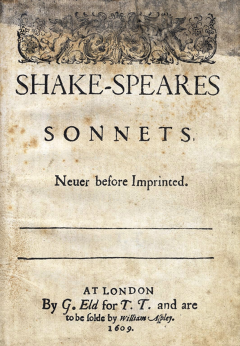
Thomas Thorpe registered a quarto volume at the Stationers' Company in London on May 20, 1609, bearing the title "SHAKE-SPEARES SONNETS. Never before Imprinted." The 154 poems within constitute one of the most analyzed, debated, and admired collections in the English language. Their publication also remains one of literary history's great mysteries, beginning with the dedication to "Mr. W.H.," whose identity scholars have argued about for four centuries without reaching consensus. The sonnets were likely written over a period of several years in the 1590s, when Shakespeare was establishing himself as London's foremost playwright. They address three principal figures: a beautiful young man urged to marry and produce heirs, a "dark lady" with whom the poet has a passionate and tormented affair, and a rival poet competing for the young man's patronage. Whether these figures were real people or literary constructions has generated an enormous scholarly industry. The poems' emotional range is extraordinary. Sonnets 1 through 17 plead with the young man to have children. Sonnets 18 through 126 explore love, jealousy, time, beauty, and mortality with an intensity that has led many readers to conclude Shakespeare was writing from personal experience. Sonnets 127 through 154, addressed to or about the dark lady, are rawer and more sexually explicit, describing desire, disgust, and self-loathing with unflinching candor. The circumstances of publication suggest Shakespeare did not authorize the printing. Unlike his narrative poems Venus and Adonis and The Rape of Lucrece, which he personally shepherded to press, the sonnets appeared without a dedication from the author. The sequence may have circulated in manuscript among a private audience for years before Thorpe obtained and published it. Shakespeare never commented on the publication. The poems' personal nature, combined with their obvious artistic mastery, has made them the most intimate window into the mind of history's greatest writer.
May 20, 1609
417 years ago
Key Figures & Places

What Else Happened on May 20
Constantine thought inviting 1,800 bishops would unify Christianity. Only 318 showed up to Nicaea, many bearing scars from recent Roman persecutions—missing eye…
A widow chose an emperor. When Zeno died of dysentery in 491, his wife Ariadne held something no Byzantine woman had possessed before: the right to pick the nex…
A massive earthquake leveled the Byzantine city of Antioch, claiming roughly 250,000 lives and shattering the region’s infrastructure. This catastrophe crippled…
King Ecgfrith brought the finest cavalry in Britain into a narrow valley near a Scottish loch. He'd conquered half of northern England by doing exactly this—ove…
He came to marry a princess and left without his head. Æthelberht II of East Anglia arrived at Sutton Walls expecting a wedding to Ælfthryth of Mercia. Instead,…
A seventy-year-old knight saved England by turning a medieval siege into a cavalry charge. William Marshal—already past any reasonable fighting age—led a relief…
Talk to History
Have a conversation with historical figures who witnessed this era. Ask questions, explore perspectives, and bring history to life.