Venera 1 Flies by Venus: Humanity Touches Another World
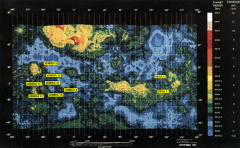
The Soviet space probe Venera 1 sailed past Venus at a distance of approximately 100,000 kilometers on May 19, 1961, becoming the first human-made object to fly by another planet. The achievement was both a triumph and a frustration. Radio contact with the probe had been lost on February 27, just seven days after launch, when the spacecraft's communications system failed. Venera 1 passed Venus blind and mute, unable to transmit any data about the planet it had been designed to study. The probe had launched from Baikonur on February 12, 1961, carrying instruments to measure cosmic radiation, magnetic fields, and the solar wind. Soviet engineers had designed it to transmit data during its Venus flyby, but a flaw in the thermal control system caused the spacecraft's electronics to overheat. Controllers sent commands for weeks, but Venera 1 never responded. Ground-based tracking confirmed the flyby trajectory, but every instrument aboard was useless without communications. The mission's partial failure typified the early Soviet planetary program, which launched probes at an extraordinary rate, accepting high failure rates in exchange for the occasional breakthrough. Of the first sixteen Soviet Venus missions, most failed during launch, in transit, or at arrival. But the program's persistence eventually produced remarkable results. Venera 7 became the first spacecraft to land on another planet in 1970, and Venera 9 returned the first photographs from Venus's surface in 1975. Venera 1's silent flyby nevertheless established a milestone: humanity had reached across interplanetary space for the first time. The spacecraft, weighing just 644 kilograms, proved that the basic engineering of planetary trajectory calculation and deep-space navigation worked. Every subsequent mission to Venus, Mars, and beyond built on the knowledge gained from this first attempt. The probe is still in solar orbit today, a dead artifact circling the Sun as a monument to the ambition and the limitations of early space exploration.
May 19, 1961
65 years ago
Key Figures & Places
What Else Happened on May 19
The emperor's bodyguards were somewhere else. Ashina Jiesheshuai and his Turkic warriors rode straight into Jiucheng Palace's summer grounds in 639, swords draw…
The Syrian son of a Roman administrator hadn't planned on becoming pope—he'd planned on living quietly as a priest. But when Gregory II took office in 715, he i…
John Kourkouas reclaimed the strategic fortress of Melitene for the Byzantine Empire, shattering the city's long-standing status as a primary base for Arab raid…
The bride traveled fifteen hundred miles from Kiev to Reims, one of the longest bridal journeys in medieval history. Anne of Kiev could read and write in at lea…
John II of Castile crushed the forces of the Infantes of Aragon at the First Battle of Olmedo, ending their long-standing interference in Castilian governance. …
The signatures happened on a Sunday in May, 2,300 miles apart. Catherine stood before lawyers in a Spanish church while a proxy held Arthur's portrait. Arthur d…
Talk to History
Have a conversation with historical figures who witnessed this era. Ask questions, explore perspectives, and bring history to life.