France Defeats Spain at Rocroi: End of Spanish Dominance
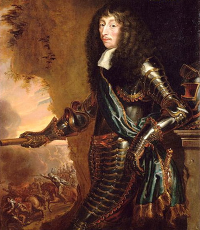
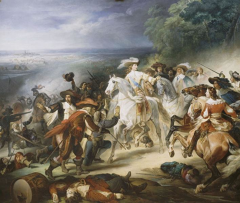
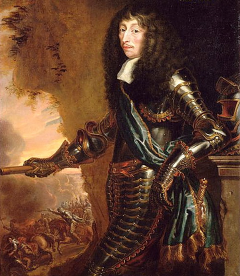
A twenty-one-year-old French prince shattered the myth of Spanish military invincibility on May 19, 1643, in a battle that redrew the map of European power. The duc d'Enghien, later known as the Grand Conde, commanded a French army at Rocroi near the Belgian border against the Spanish Army of Flanders, whose fearsome tercios had dominated European battlefields for over a century. The victory announced France's arrival as the continent's dominant military power. The Spanish tercios were massive formations of pikemen and musketeers, typically numbering 3,000 men each, that advanced in disciplined blocks bristling with eighteen-foot pikes. For 150 years, no army had found a reliable way to defeat them. At Rocroi, the Spanish right wing initially routed the French left, but d'Enghien personally led a devastating cavalry charge that destroyed the Spanish left wing and wheeled around to strike the tercios from behind. The French cavalry encircled the Spanish infantry formations and demanded surrender. The tercios refused. D'Enghien ordered his artillery brought forward and pounded the formations at close range. The slaughter was immense. Roughly 8,000 Spanish soldiers were killed or captured, including most of their officer corps. The victory came just five days after the death of King Louis XIII, making it a dramatic inauguration for the regency government ruling on behalf of the five-year-old Louis XIV. Rocroi did not destroy Spanish military power overnight, but it cracked the aura of invincibility that had surrounded the tercios since the Italian Wars of the early 1500s. Spain continued to fight France for another sixteen years before the Treaty of the Pyrenees in 1659 formally confirmed French supremacy. D'Enghien's victory marked the beginning of a French military dominance in Europe that lasted, with interruptions, until Napoleon's defeat at Waterloo in 1815. The age of Spain had ended. The age of France had begun.
May 19, 1643
383 years ago
Key Figures & Places
What Else Happened on May 19
The emperor's bodyguards were somewhere else. Ashina Jiesheshuai and his Turkic warriors rode straight into Jiucheng Palace's summer grounds in 639, swords draw…
The Syrian son of a Roman administrator hadn't planned on becoming pope—he'd planned on living quietly as a priest. But when Gregory II took office in 715, he i…
John Kourkouas reclaimed the strategic fortress of Melitene for the Byzantine Empire, shattering the city's long-standing status as a primary base for Arab raid…
The bride traveled fifteen hundred miles from Kiev to Reims, one of the longest bridal journeys in medieval history. Anne of Kiev could read and write in at lea…
John II of Castile crushed the forces of the Infantes of Aragon at the First Battle of Olmedo, ending their long-standing interference in Castilian governance. …
The signatures happened on a Sunday in May, 2,300 miles apart. Catherine stood before lawyers in a Spanish church while a proxy held Arthur's portrait. Arthur d…
Talk to History
Have a conversation with historical figures who witnessed this era. Ask questions, explore perspectives, and bring history to life.