

First Laser Operated: Theodore Maiman Fires a Beam of Light
Theodore Maiman fires a pulse of red light from his ruby crystal, instantly proving that coherent light could exist outside theory and launching the modern era of photonics. This breakthrough directly enabled technologies like fiber-optic internet, laser surgery, and barcode scanners that define daily life today.
May 16, 1960
66 years ago
Key Figures & Places
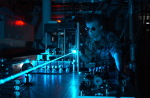
laser
Wikipedia

Theodore Maiman
Wikipedia
optics
Wikipedia

Hughes Research Laboratories
Wikipedia
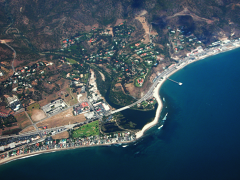
Malibu, California
Wikipedia
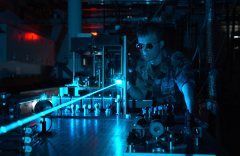
optical laser
Wikipedia
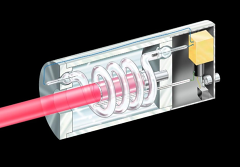
ruby laser
Wikipedia

Theodore Maiman
Wikipedia

Laser
Wikipedia

Ruby laser
Wikipedia

HRL Laboratories
Wikipedia

Malibu, California
Wikipedia

California
Wikipedia

United States
Wikipedia

Franklin D. Roosevelt
Wikipedia

Douglas MacArthur
Wikipedia

Philippines
Wikipedia
What Else Happened on May 16
Julia Mesa, tía de Caracalla, es expulsada de su casa en Siria por el autoproclamado Macrino y declara a su nieto de 14 años Heliogábalo, emperador de Roma.
A grandmother in exile just handed her teenage grandson the Roman Empire. Julia Maesa didn't accept banishment quietly—the new emperor Macrinus thought sending …
Suzaku was twenty-nine and already done. The youngest emperor to abdicate in two centuries, he'd spent thirteen years watching his own health crumble while cour…
Baldwin IX of Flanders ascended the throne in Constantinople, establishing the Latin Empire after the Fourth Crusade dismantled the Byzantine capital. This coro…
Jaime II de Aragón e Ismail II de Granada firman un tratado de paz y amistad por cinco años que será después renovado.
Jean l'Aveugle, comte du Luxembourg, et roi de Bohême, confère à la ville d'Esch-sur-Alzette le statut de « ville libre ».
Talk to History
Have a conversation with historical figures who witnessed this era. Ask questions, explore perspectives, and bring history to life.