Skylab Launches: America's First Space Station Takes Flight
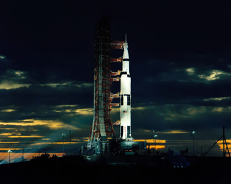
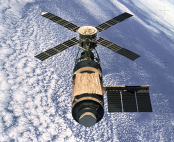
NASA launched Skylab, America's first space station, atop the last Saturn V rocket ever built on May 14, 1973. Sixty-three seconds after liftoff from Kennedy Space Center, a meteoroid shield tore away in the aerodynamic forces of ascent, ripping off one of the station's two main solar arrays and jamming the other. The station reached orbit crippled: without the shield, interior temperatures soared to 126 degrees Fahrenheit, and without full solar power, it could barely function. Skylab was built from a converted S-IVB third stage of the Saturn V, giving it a habitable volume larger than any spacecraft before or since. The station carried a solar observatory, an Earth-resources camera system, and dozens of experiments in materials science and human physiology. NASA had spent years and billions of dollars preparing the program as a bridge between Apollo and the Space Shuttle. The first crew, launched eleven days after Skylab, performed one of the most remarkable repair missions in space history. Astronauts Pete Conrad, Joe Kerwin, and Paul Weitz conducted a spacewalk to deploy a parasol-like sunshade through a small airlock, bringing temperatures down to habitable levels. They then freed the jammed solar array with bolt cutters, restoring electrical power. The repairs saved the entire program. Three crews occupied Skylab over the following nine months, spending 28, 59, and 84 days in orbit respectively. The longest mission proved that humans could live and work in space for extended periods without serious physical deterioration, a finding essential for planning future long-duration missions. Skylab's solar telescope captured over 175,000 images of the Sun. The station reentered the atmosphere in 1979, scattering debris across western Australia. NASA sent the Australians a check for the littering fine.
May 14, 1973
53 years ago
Key Figures & Places
What Else Happened on May 14
Robert II was dying, and his kingdom was about to tear itself apart. The old Capetian king had already watched one son rebel against him—his firstborn Hugh, co-…
The Byzantine emperor's ships were already in the lake. Alexios I had secretly sailed a fleet overland—dragged on wheeled platforms, piece by piece—to cut off N…
Simon de Montfort's rebel army smashed King Henry III's forces on the chalk downs above Lewes on May 14, 1264, capturing both the king and his son Prince Edward…
The mellah in Fez had walls for a reason. When the Marinid sultan fell in 1465, those walls didn't hold. Rioters poured through during three days of upheaval th…
He was thirteen years old and already losing his hair—a genetic curse that would earn Charles VIII the nickname "Charles the Affable" because what else could yo…
French forces crushed the Venetian army at the Battle of Agnadello, halting the Republic of Venice’s expansion onto the Italian mainland. This defeat forced the…
Talk to History
Have a conversation with historical figures who witnessed this era. Ask questions, explore perspectives, and bring history to life.