

Israel Declares Independence: State Born Amidst Arab War
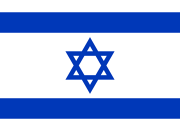
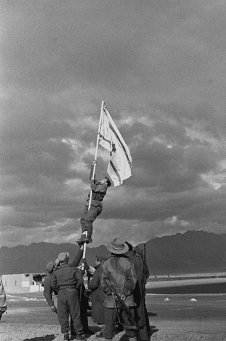
David Ben-Gurion stood beneath a portrait of Theodor Herzl in the Tel Aviv Museum and read aloud the words that created a nation. The Declaration of the Establishment of the State of Israel, proclaimed on May 14, 1948, came just hours before the British Mandate officially expired at midnight. Ben-Gurion finished reading, the audience sang "Hatikvah," and within minutes, five Arab armies began mobilizing for an invasion that would begin the next morning. The timing was calculated to fill the political vacuum the British departure would create. Britain had governed Palestine under a League of Nations mandate since 1920 and had spent the final years trying to limit Jewish immigration while managing escalating violence between Jewish and Arab communities. The United Nations had voted for partition in November 1947, dividing Palestine into Jewish and Arab states, but the Arab leadership rejected the plan entirely. The declaration itself was a carefully constructed document, balancing references to Jewish historical connection to the land, the Balfour Declaration, the Holocaust, and the UN partition resolution. Ben-Gurion's provisional government offered peace to neighboring states and promised equal rights to Arab citizens. President Truman recognized the new state within eleven minutes, beating the Soviet Union by three days. The Arab-Israeli War of 1948 that followed lasted until March 1949 and cost over 6,000 Israeli lives, roughly one percent of the Jewish population. An estimated 700,000 Palestinian Arabs fled or were expelled during the conflict, creating a refugee crisis that remains unresolved. Israel's founding simultaneously fulfilled a two-thousand-year aspiration and ignited a conflict that has shaped Middle Eastern politics ever since. The state Ben-Gurion declared in a modest museum now has a population exceeding nine million.
May 14, 1948
78 years ago
Key Figures & Places


What Else Happened on May 14
Robert II was dying, and his kingdom was about to tear itself apart. The old Capetian king had already watched one son rebel against him—his firstborn Hugh, co-…
The Byzantine emperor's ships were already in the lake. Alexios I had secretly sailed a fleet overland—dragged on wheeled platforms, piece by piece—to cut off N…

Simon de Montfort's rebel army smashed King Henry III's forces on the chalk downs above Lewes on May 14, 1264, capturing both the king and his son Prince Edward…
The mellah in Fez had walls for a reason. When the Marinid sultan fell in 1465, those walls didn't hold. Rioters poured through during three days of upheaval th…
He was thirteen years old and already losing his hair—a genetic curse that would earn Charles VIII the nickname "Charles the Affable" because what else could yo…
French forces crushed the Venetian army at the Battle of Agnadello, halting the Republic of Venice’s expansion onto the Italian mainland. This defeat forced the…
Talk to History
Have a conversation with historical figures who witnessed this era. Ask questions, explore perspectives, and bring history to life.