Lewis and Clark Set Out: Mapping America's New Frontier
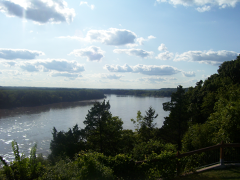
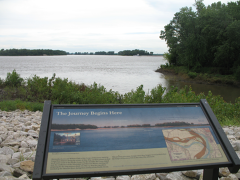
Meriwether Lewis and William Clark pushed off from Camp Dubois near the confluence of the Missouri and Mississippi rivers on May 14, 1804, beginning an expedition that would reshape America's understanding of its own continent. The Corps of Discovery, numbering roughly forty-five men in a keelboat and two pirogues, headed upstream against the Missouri's powerful current. Their mission from President Thomas Jefferson was to find a practical water route to the Pacific Ocean, document the geography, and establish American claims to the territory acquired in the Louisiana Purchase. Jefferson had spent years planning the expedition before the Louisiana Purchase made it politically viable. He personally designed the scientific agenda, instructing Lewis to catalog plants, animals, minerals, and Native peoples encountered along the route. Lewis spent months in Philadelphia studying botany, celestial navigation, and medicine before departing. Clark, a skilled mapmaker and frontiersman, handled military command and much of the day-to-day logistics. The journey upstream was grueling. The Missouri's current, submerged logs, and collapsing banks made progress painfully slow. The expedition averaged roughly fifteen miles a day, with men pulling the keelboat by rope from shore when wind and oars proved insufficient. Encounters with Native nations along the river ranged from diplomatic exchanges of gifts and speeches to tense standoffs, particularly with the Teton Sioux near present-day Pierre, South Dakota. The expedition reached the Pacific in November 1805 and returned to St. Louis in September 1806, having traveled roughly eight thousand miles. Lewis and Clark documented over 300 species unknown to Western science, produced the first accurate maps of the American West, and established relationships with dozens of Native nations. Their journals, published years later, became foundational documents of American exploration and fueled the westward expansion that would define the nineteenth century.
May 14, 1804
222 years ago
Key Figures & Places
What Else Happened on May 14
Robert II was dying, and his kingdom was about to tear itself apart. The old Capetian king had already watched one son rebel against him—his firstborn Hugh, co-…
The Byzantine emperor's ships were already in the lake. Alexios I had secretly sailed a fleet overland—dragged on wheeled platforms, piece by piece—to cut off N…
Simon de Montfort's rebel army smashed King Henry III's forces on the chalk downs above Lewes on May 14, 1264, capturing both the king and his son Prince Edward…
The mellah in Fez had walls for a reason. When the Marinid sultan fell in 1465, those walls didn't hold. Rioters poured through during three days of upheaval th…
He was thirteen years old and already losing his hair—a genetic curse that would earn Charles VIII the nickname "Charles the Affable" because what else could yo…
French forces crushed the Venetian army at the Battle of Agnadello, halting the Republic of Venice’s expansion onto the Italian mainland. This defeat forced the…
Talk to History
Have a conversation with historical figures who witnessed this era. Ask questions, explore perspectives, and bring history to life.