War Declared on Mexico: Texas Expansion Begins
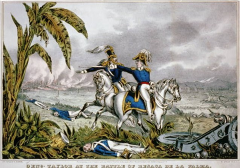
President James K. Polk told Congress on May 13, 1846, that Mexico had "shed American blood upon American soil," and the legislature voted overwhelmingly for war. The claim was technically false. The skirmish that triggered the declaration had occurred in disputed territory between the Nueces River and the Rio Grande, land that both nations claimed. Polk had deliberately provoked the confrontation by ordering General Zachary Taylor to march troops into the contested strip. The war's true cause was territorial ambition. Polk had entered office in 1845 determined to acquire California and the Southwest from Mexico. He first attempted to buy the territory, sending diplomat John Slidell to Mexico City with an offer of $25 million. The Mexican government refused to even receive Slidell. Polk then positioned Taylor's army on the Rio Grande, knowing that Mexico considered any American military presence south of the Nueces an act of war. The conflict lasted two years and extended across an enormous geographic range. American forces invaded northern Mexico under Taylor, captured New Mexico and California under Stephen Kearny, and mounted an ambitious amphibious assault on Veracruz under Winfield Scott. Scott's march from Veracruz to Mexico City, following roughly the route Cortes had taken three centuries earlier, culminated in the capture of the Mexican capital in September 1847. The Treaty of Guadalupe Hidalgo, signed in February 1848, transferred roughly half of Mexico's territory to the United States, including present-day California, Nevada, Utah, and parts of Arizona, New Mexico, Colorado, and Wyoming. The acquisition reignited the slavery debate with explosive force. Whether the new territories would be slave or free became the central political question of the 1850s, fracturing parties, poisoning compromise, and accelerating the march toward civil war.
May 13, 1846
180 years ago
Key Figures & Places

What Else Happened on May 13
The Turkish galleys outnumbered the Latin ships nearly two to one off Pallene's coast. Didn't matter. Humbert II of Vienne led twenty-eight vessels against fift…
She was thirty years old and dying when Jesus showed up sixteen times in her bedroom. Julian of Norwich spent May 8th, 1373 watching her own body fail—then watc…
She was thirty and dying when the visions started. Julian of Norwich, an anchorite locked voluntarily in a stone cell attached to St. Julian's Church, received …
Pope Alexander VI formally excommunicated the Dominican friar Girolamo Savonarola after the preacher’s relentless denunciations of papal corruption threatened t…
The man who'd just finished mapping coastlines for Spain switched jerseys. Vespucci sailed west again in 1501, but this time King Manuel I of Portugal cut his c…
They'd already married in secret in Paris—weeks earlier, pregnant and terrified. Mary Tudor had been France's queen for three months before her elderly husband …
Talk to History
Have a conversation with historical figures who witnessed this era. Ask questions, explore perspectives, and bring history to life.