

Mary Queen of Scots Defeated: Exile Begins After Langside
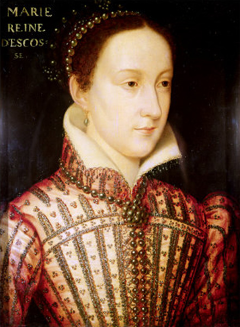
Mary Stuart's last army shattered in forty-five minutes on a hillside south of Glasgow. The Battle of Langside on May 13, 1568, ended the Queen of Scots' desperate bid to reclaim her throne from forces loyal to her infant son, James VI. Mary had escaped from Loch Leven Castle just eleven days earlier, rallied six thousand supporters, and marched toward Dumbarton Castle, where she hoped to regroup and gather French reinforcements. Her half-brother, the Earl of Moray, serving as regent for the thirteen-month-old king, intercepted her army with a smaller but better-positioned force. Moray occupied the village of Langside and the high ground around it, forcing Mary's troops to attack uphill through narrow lanes. The Hamiltons, leading Mary's vanguard, became trapped in the confined streets and were cut apart by pikemen and arquebusiers firing from buildings and hedgerows. Mary watched the battle from a nearby hill. When her cavalry broke and her infantry dissolved into a rout, she fled south with a small escort, riding sixty miles in a single day to reach the Solway Firth. On May 16, she crossed into England and threw herself on the mercy of her cousin, Queen Elizabeth I. She expected hospitality and military support to reclaim her Scottish crown. Elizabeth's response was to keep Mary under house arrest for the next nineteen years. The Scottish queen became a perpetual focal point for Catholic conspiracies against the Protestant English throne. Each plot tightened the conditions of her confinement. When the Babington Plot of 1586 produced letters in which Mary appeared to endorse Elizabeth's assassination, the English queen finally authorized her execution. Mary was beheaded at Fotheringhay Castle in February 1587.
May 13, 1568
458 years ago
Key Figures & Places

What Else Happened on May 13
The Turkish galleys outnumbered the Latin ships nearly two to one off Pallene's coast. Didn't matter. Humbert II of Vienne led twenty-eight vessels against fift…
She was thirty years old and dying when Jesus showed up sixteen times in her bedroom. Julian of Norwich spent May 8th, 1373 watching her own body fail—then watc…
She was thirty and dying when the visions started. Julian of Norwich, an anchorite locked voluntarily in a stone cell attached to St. Julian's Church, received …
Pope Alexander VI formally excommunicated the Dominican friar Girolamo Savonarola after the preacher’s relentless denunciations of papal corruption threatened t…
The man who'd just finished mapping coastlines for Spain switched jerseys. Vespucci sailed west again in 1501, but this time King Manuel I of Portugal cut his c…
They'd already married in secret in Paris—weeks earlier, pregnant and terrified. Mary Tudor had been France's queen for three months before her elderly husband …
Talk to History
Have a conversation with historical figures who witnessed this era. Ask questions, explore perspectives, and bring history to life.