

Berlin Blockade Lifted: Cold War Tensions Ease
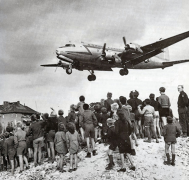
Soviet guards quietly lifted the barriers on the autobahn to West Berlin at one minute past midnight on May 12, 1949, ending a 318-day blockade that had brought the Cold War to the edge of armed conflict. The first cars rolled through checkpoints that had been sealed since June 24, 1948, when Stalin cut all road, rail, and canal access to the Western sectors of Berlin in an attempt to force the Allies out of the city. The Western response had been breathtaking in its audacity. Rather than abandon two million Berliners or risk war by forcing a ground convoy through Soviet-controlled territory, the United States and Britain launched the Berlin Airlift. At its peak, cargo planes landed at Tempelhof Airport every ninety seconds, delivering up to 13,000 tons of food, fuel, and supplies daily. American and British pilots flew nearly 280,000 flights over eleven months, a logistical achievement unprecedented in aviation history. The blockade backfired on Stalin spectacularly. Instead of demonstrating Soviet power, it unified Western resolve and accelerated the creation of institutions Moscow had hoped to prevent. NATO was founded in April 1949, one month before the blockade ended. The Federal Republic of Germany was established just eleven days after the barriers lifted. West Berlin, rather than becoming a Soviet prize, became the most potent symbol of Western determination in the Cold War. Berliners emerged from the crisis with a bond to their American and British protectors that endured for decades. The airlift's pilots, whom Berliners called "Rosinenbomber" (raisin bombers), became folk heroes. Tempelhof Airport's role in the airlift transformed it from a transportation hub into a monument. The blockade proved that economic pressure and logistical ingenuity could substitute for military confrontation between nuclear powers.
May 12, 1949
77 years ago
Key Figures & Places
Soviet Union
Wikipedia
Berlin Airlift
Wikipedia

Berlin Blockade
Wikipedia

Cold War
Wikipedia
Soviet Union
Wikipedia

Berlin Blockade
Wikipedia
Crisis del Sputnik
Wikipedia

Intercontinental ballistic missile
Wikipedia

NORAD
Wikipedia
Jessup-Malik-Abkommen
Wikipedia
Batalla de Jaljin Gol
Wikipedia

Japan
Wikipedia

Manchukuo
Wikipedia

Mongolia
Wikipedia

World War II
Wikipedia

Korea
Wikipedia
تاكاشي كوندو
Wikipedia
What Else Happened on May 12
Pope Stephen I ascended to the papacy, inheriting a church deeply fractured by debates over whether to readmit Christians who had renounced their faith during R…
Stephen became pope in 254 and immediately decided that baptisms performed by heretics still counted. The Novatianists—rigorists who believed lapsed Christians …
Diocletian's executioner faced a kid who'd barely hit puberty. Fourteen-year-old Pancras refused to burn incense to Roman gods—a crime punishable by death durin…

Zhu Wen forced the last Tang emperor, Emperor Ai, to abdicate on May 12, 907, ending a dynasty that had ruled China for nearly three hundred years and plunging …
Ahmad ibn Fadlan reached the Volga Bulgars, completing a grueling diplomatic mission from Baghdad to the northern frontier. His detailed journals provided the f…
Richard I married Berengaria of Navarre in a chapel on Cyprus—an island he'd just conquered on his way to the Crusades. She became England's queen on May 12, 11…
Talk to History
Have a conversation with historical figures who witnessed this era. Ask questions, explore perspectives, and bring history to life.