Dianetics Published: Hubbard Launches a Mental Revolution
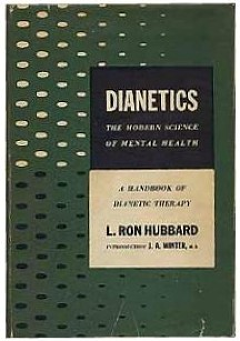
L. Ron Hubbard's Dianetics: The Modern Science of Mental Health hit bookstores on May 9, 1950, and sold 150,000 copies in its first year, an astonishing figure for a book that claimed to have discovered the single source of all human mental and physical illness. Hubbard, a prolific science fiction writer with no formal training in psychology or medicine, presented Dianetics as a revolutionary system that could cure everything from poor eyesight to criminal behavior through a technique he called "auditing." The book's central theory was straightforward. Hubbard argued that the human mind contained a "reactive mind" that stored recordings of painful experiences called "engrams." These engrams, accumulated from birth onward and even in the womb, caused irrational behavior, psychosomatic illness, and emotional distress. Through auditing, a process in which a trained practitioner guided a subject to recall and re-experience traumatic memories, the reactive mind could be cleared, producing a state Hubbard called "Clear." The American psychological establishment reacted with alarm. The American Psychological Association passed a resolution cautioning members against using Dianetics techniques. Academic reviewers noted that Hubbard offered no controlled studies, no peer review, and no evidence beyond anecdotal claims. The book's scientific language masked a complete absence of scientific method. None of this slowed the movement's growth. Dianetics groups formed spontaneously across the United States, with enthusiasts auditing each other in living rooms. Hubbard became a celebrity, lecturing to packed halls and training auditors through a foundation he established in Elizabeth, New Jersey. The foundation's finances were chaotic, and it went bankrupt within a year, but the demand for Hubbard's system was undeniable. By 1954, Hubbard had repackaged and expanded Dianetics into Scientology, incorporating past-life recall, a cosmological mythology, and a hierarchical organizational structure. The Church of Scientology eventually gained tax-exempt religious status in the United States and established operations in over 160 countries. Dianetics remains its foundational text, still sold in airports and bookstores, the starting point of a system that generated billions of dollars and attracted both devoted followers and fierce criticism.
May 9, 1950
76 years ago
Key Figures & Places
What Else Happened on May 9
Thutmose III chose the narrow Aruna pass over safer routes, ignoring every advisor who told him it was suicide. His gamble worked. The Canaanite coalition waite…
Athanasius ascended to the patriarchate of Alexandria, launching a decades-long defense of Nicene Christianity against the rising tide of Arianism. His relentle…
Melus of Bari had already tried once to throw off Byzantine rule and failed. But in 1009, this Lombard nobleman tried again, rallying forces in the port city th…
The roof was gone before they finished the walls. Lincoln Cathedral's consecration in 1092 came twenty years into construction—they blessed a building site, ess…
The wine was the thing. England needed Portuguese ports to break France's stranglehold on Bordeaux, and Portugal needed English archers to keep Castile from swa…
He ruled for six years and died in his bed. Sort of. 'Abd al-Latif, who'd blinded his own father Ulugh Beg to seize the Timurid throne in 1449, got strangled by…
Talk to History
Have a conversation with historical figures who witnessed this era. Ask questions, explore perspectives, and bring history to life.