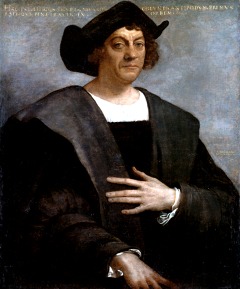
Columbus Departs for Final Voyage to the Americas
Columbus was 51 years old, arthritic, partially blind, and politically disgraced when he sailed from Cadiz on May 9, 1502, with four small caravels and 150 men on his fourth and final voyage to the Americas. The Admiral of the Ocean Sea, who had once negotiated titles and percentages with the Spanish crown as an equal, departed under strict orders not to stop at Hispaniola, the colony he had founded and where his successor had barred him from landing. The first three voyages had made Columbus the most famous navigator in Europe and then destroyed his reputation. He had discovered the Caribbean and Central American coast for Spain but proved a disastrous administrator. His governance of Hispaniola was marked by forced labor, brutality toward Indigenous peoples, and infighting among the colonists. Francisco de Bobadilla, sent to investigate, had shipped Columbus back to Spain in chains in 1500. King Ferdinand and Queen Isabella restored his freedom but stripped him of his governorship. The fourth voyage was Columbus's attempt at redemption. He believed a passage to Asia lay somewhere along the Central American coast, and he spent months exploring the coasts of present-day Honduras, Nicaragua, Costa Rica, and Panama, enduring storms so violent that one tempest lasted 28 days without respite. The crews were terrified. Columbus, navigating from memory and astronomical observation, pressed on. He found no strait to Asia. He did find gold deposits along the Veragua coast of Panama, but hostile Indigenous resistance and conflicts among his own men prevented establishing a permanent settlement. Two of his four ships were abandoned as unseaworthy, eaten through by shipworms. Columbus and his remaining crew were marooned on Jamaica for a year before rescue arrived from Hispaniola. Columbus returned to Spain in November 1504, broken in health and fortune. Queen Isabella, his most powerful patron, died three weeks later. He spent his final eighteen months petitioning King Ferdinand for the restoration of his titles and revenues, dying in Valladolid on May 20, 1506, still believing he had reached the outskirts of Asia. He never knew he had found two continents.
May 9, 1502
524 years ago
Key Figures & Places
What Else Happened on May 9
Thutmose III chose the narrow Aruna pass over safer routes, ignoring every advisor who told him it was suicide. His gamble worked. The Canaanite coalition waite…
Athanasius ascended to the patriarchate of Alexandria, launching a decades-long defense of Nicene Christianity against the rising tide of Arianism. His relentle…
Melus of Bari had already tried once to throw off Byzantine rule and failed. But in 1009, this Lombard nobleman tried again, rallying forces in the port city th…
The roof was gone before they finished the walls. Lincoln Cathedral's consecration in 1092 came twenty years into construction—they blessed a building site, ess…
The wine was the thing. England needed Portuguese ports to break France's stranglehold on Bordeaux, and Portugal needed English archers to keep Castile from swa…
He ruled for six years and died in his bed. Sort of. 'Abd al-Latif, who'd blinded his own father Ulugh Beg to seize the Timurid throne in 1449, got strangled by…
Talk to History
Have a conversation with historical figures who witnessed this era. Ask questions, explore perspectives, and bring history to life.