Taylor Defeats Mexico: Mexican-American War Begins
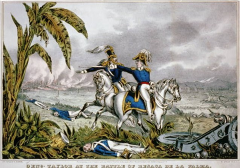
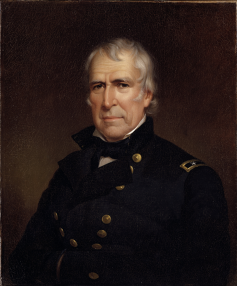
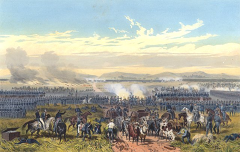
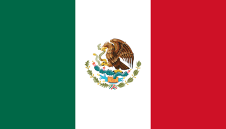
General Zachary Taylor's artillery did the work. On May 8, 1846, American field guns firing explosive shells systematically dismantled Mexican infantry and cavalry formations across the flat prairie near the Rio Grande, winning the Battle of Palo Alto and opening the Mexican-American War with a demonstration of technological superiority that would define the entire conflict. The war's origins lay in the American annexation of Texas in 1845 and a dispute over the new state's southern boundary. Texas claimed the Rio Grande; Mexico insisted the border was the Nueces River, roughly 150 miles farther north. President James K. Polk, eager for a war that might also deliver California and New Mexico, ordered Taylor to march 3,500 troops to the Rio Grande in March 1846, placing them on territory Mexico considered sovereign. Mexican General Mariano Arista crossed the Rio Grande in late April with roughly 3,700 troops and cut Taylor's supply line to Point Isabel on the coast. Taylor force-marched back from Point Isabel with his supplies on May 8 and encountered Arista's army deployed in a line across the Palo Alto prairie, a flat grassland dotted with palmettos. The battle lasted five hours, fought almost entirely at long range. Taylor's "flying artillery," mobile horse-drawn batteries commanded by officers like Major Samuel Ringgold, maneuvered quickly across the open terrain and pounded Mexican positions with explosive shells that were far more effective than the solid cannonballs used by Mexican guns. Ringgold was killed by a Mexican cannonball, becoming the first American officer to die in the war, but his battery continued firing. Mexican casualties numbered roughly 400 killed and wounded against fewer than 50 for the Americans. The battle proved that the U.S. Army's investment in modern artillery tactics and West Point-trained officers had created a qualitative advantage that Mexican numerical parity could not overcome. Taylor pursued Arista the next day at Resaca de la Palma, routing the Mexican force entirely. Congress declared war on May 13, and the conflict that followed cost Mexico half its national territory.
May 8, 1846
180 years ago
Key Figures & Places
What Else Happened on May 8
The Zhi family thought they'd won when they flooded Jinyang's walls—until the Zhao and Wei families switched sides mid-siege and turned those same waters agains…
The emperor who famously cared more about his chickens than his empire signed tax relief for seven Italian provinces in 413—after the Visigoths had already burn…
The bishops who walked into Toledo that May carried weapons under their robes. Visigothic Arianism had ruled Spain for two centuries—father and son weren't the …
King Reccared I convened the Third Council of Toledo to formally renounce his Arian faith in favor of Nicene Christianity. This conversion unified the Visigothi…
King Edward III and King John II halted the Hundred Years' War by signing the Treaty of Brétigny, granting England sovereignty over vast swathes of southwestern…
She asked for death and got sixteen visions instead. Julian of Norwich, thirty years old and desperately ill in May 1373, received last rites from her priest. T…
Talk to History
Have a conversation with historical figures who witnessed this era. Ask questions, explore perspectives, and bring history to life.