

Greeks Defeat Turks at Gravia: Independence War Heats Up
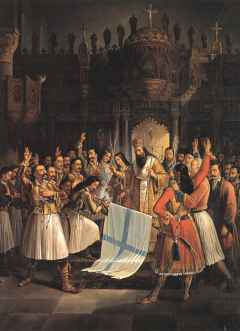
Greek forces repel a superior Ottoman army at the Battle of Gravia Inn, shattering the illusion of Turkish invincibility and sparking a wave of uprisings across the Peloponnese. This decisive victory transforms a localized rebellion into a full-scale war for independence that eventually secures Greece's sovereignty from centuries of Ottoman rule.
May 8, 1821
205 years ago
Key Figures & Places



What Else Happened on May 8
The Zhi family thought they'd won when they flooded Jinyang's walls—until the Zhao and Wei families switched sides mid-siege and turned those same waters agains…
Jules César adopte Octavien / Octave le futur premier empereur romain Auguste.
The emperor who famously cared more about his chickens than his empire signed tax relief for seven Italian provinces in 413—after the Visigoths had already burn…
The bishops who walked into Toledo that May carried weapons under their robes. Visigothic Arianism had ruled Spain for two centuries—father and son weren't the …
King Reccared I convened the Third Council of Toledo to formally renounce his Arian faith in favor of Nicene Christianity. This conversion unified the Visigothi…
Parte desde Córdoba (España) la segunda aceifa de Abderramán III contra el caudillo rebelde Omar ben Hafsún.
Talk to History
Have a conversation with historical figures who witnessed this era. Ask questions, explore perspectives, and bring history to life.