Germany Signs Surrender: WWII in Europe Ends
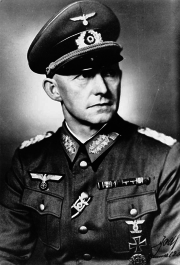
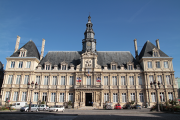
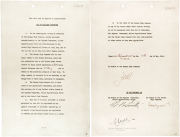
Generaloberst Alfred Jodl sat down at a plain wooden table in a red brick schoolhouse in Reims, France, at 2:41 AM on May 7, 1945, and signed the instrument that ended Nazi Germany's war against the world. The document was a single page. The war it concluded had killed an estimated 70 million people, destroyed the political order of Europe, and revealed humanity's capacity for industrialized genocide. The surrender at Reims came five days after Hitler's suicide in his Berlin bunker and two days after Grand Admiral Karl Donitz, Hitler's designated successor, authorized Jodl to negotiate. Donitz's strategy was to delay capitulation long enough for German troops and civilians on the Eastern Front to flee westward and surrender to American and British forces rather than the Soviets. Eisenhower refused the selective surrender and demanded unconditional capitulation on all fronts simultaneously. The signing took place in a classroom that served as the war room of the Supreme Headquarters Allied Expeditionary Force. General Walter Bedell Smith signed for the Western Allies, General Ivan Susloparov for the Soviet Union, and General Francois Sevez for France. Eisenhower refused to be in the room with Jodl during the signing, receiving him afterward only to ask whether he understood the terms. Jodl replied that the German people and military had no choice. Stalin was furious. He considered the Reims ceremony insufficient because it had been conducted at an American headquarters with a relatively junior Soviet representative. He demanded a second ceremony in Berlin, the city his armies had fought and bled to capture. A duplicate signing took place at Soviet headquarters in Karlshorst on May 8, with Field Marshal Wilhelm Keitel representing Germany. The dual surrenders created the anomaly of two victory dates. Western nations celebrate V-E Day on May 8, while Russia observes Victory Day on May 9, owing to the time zone difference when the Berlin ceremony concluded after midnight Moscow time. The distinction persists as a reminder that even in victory, the wartime alliance was already fracturing along the lines that would define the Cold War.
May 7, 1945
81 years ago
Key Figures & Places
What Else Happened on May 7
The Roman Caesar didn't realize Antioch's Jews had already been pushed to the edge when he arrived in 351. Constantius Gallus had a reputation—his cousin Julian…
The garrison commander at Diocaesarea didn't wait for permission. When Gallus settled into Antioch's imperial palace in 351, Jewish rebels seized the city's wea…
The dome didn't just crack—it pancaked into the nave, twenty thousand tons of brick and mortar crushing the floor where emperors had stood. A mild earthquake th…
The Second Council of Lyon convened to establish the papal conclave, mandating that cardinals be locked in a room until they elected a new pontiff. This strict …
Cardinal Pierre Roger ascended to the papacy as Clement VI, transforming Avignon into a lavish center of European art and diplomacy. His reign solidified the Av…
A crossbow bolt struck Joan of Arc between the neck and shoulder as she led an assault on the Tourelles fortification at Orleans on May 7, 1429. She pulled the …
Talk to History
Have a conversation with historical figures who witnessed this era. Ask questions, explore perspectives, and bring history to life.