Mexicans Defeat France: Battle of Puebla Wins Glory
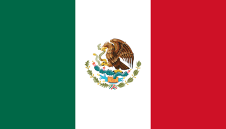
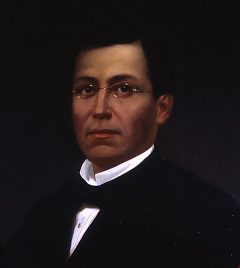
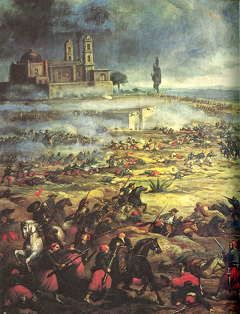
The French army had not lost a battle in nearly fifty years. On May 5, 1862, outside the city of Puebla in central Mexico, a force of 4,500 Mexican soldiers under General Ignacio Zaragoza shattered that record, repelling three French assaults and inflicting over 450 casualties on a professional European army that had expected to march to Mexico City without serious resistance. France's intervention in Mexico was the brainchild of Emperor Napoleon III, who saw an opportunity to establish a French client state in the Americas while the United States was consumed by its own civil war. Mexico had suspended foreign debt payments in 1861, giving Napoleon a pretext to send troops. Spain and Britain, the other creditors, withdrew after recognizing France's imperial ambitions, but Napoleon pressed forward with 6,000 soldiers under General Charles de Lorencez. Lorencez approached Puebla on May 5 with supreme confidence. His troops were veterans of campaigns in Crimea, Italy, and Algeria. Zaragoza's defenders were a mix of regular army units and indigenous militias, many armed with outdated weapons. Zaragoza positioned his forces on the fortified hills of Loreto and Guadalupe above the city and waited. The French launched three frontal assaults uphill through muddy terrain under fire. Each attack broke against the Mexican fortifications. A cavalry charge by Mexican lancers drove back the final French advance, and by evening Lorencez ordered a retreat, having lost 462 men to Mexico's 83. The defeat was tactical rather than strategic, as France returned the following year with 30,000 troops and installed Archduke Maximilian of Austria as Emperor of Mexico. The battle's military significance was limited, but its symbolic power was enormous. Zaragoza's victory proved that a Latin American nation could defeat a European imperial power in open combat. Cinco de Mayo became a celebration of Mexican resilience, observed more widely in Mexican-American communities in the United States than in Mexico itself, where September 16 (Independence Day) holds greater national significance.
May 5, 1862
164 years ago
Key Figures & Places

What Else Happened on May 5
The emperor wasn't even there. Justinian I called 165 bishops to Constantinople to settle a theological fight that had been splitting Christians for a century—b…
Rebel barons formally renounced their allegiance to King John, declaring open war against the English crown. This bold act of defiance forced the King to negoti…
Kublai Khan won the Mongol throne by defeating his younger brother Ariq Böke in a four-year civil war that killed tens of thousands of their own people. The emp…
Christopher Columbus waded ashore at Discovery Bay, claiming the island of Jamaica for the Spanish Crown during his second voyage. This arrival initiated over a…
Christopher Columbus sighted the Jamaican coastline during his second voyage, claiming the island for the Spanish crown upon landing at Discovery Bay. This arri…
The invasion fleet sailed past Okinawa's coral reefs with three thousand samurai who'd never fought a naval campaign before. Shimazu Tadatsune wanted China trad…
Talk to History
Have a conversation with historical figures who witnessed this era. Ask questions, explore perspectives, and bring history to life.