Napoleon Dies in Exile: An Era Ends
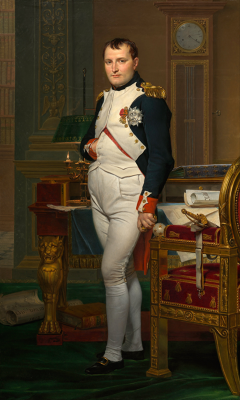
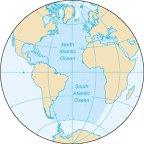
Napoleon Bonaparte spent his final years dictating his memoirs to a small circle of loyal companions on a windswept volcanic island in the South Atlantic, crafting the legend that would outlive him by centuries. He died at Longwood House on Saint Helena on May 5, 1821, at age 51, after months of severe abdominal pain, vomiting, and progressive weakness that his doctors could not explain or treat. The British had exiled Napoleon to Saint Helena after his defeat at Waterloo in June 1815 and his brief second abdication. The island, 1,200 miles from the nearest landmass, was chosen specifically because escape was impossible. Governor Sir Hudson Lowe, assigned to guard the former emperor, imposed restrictions that Napoleon and his entourage considered deliberately humiliating: armed sentries within sight of the house, limits on riding, and the requirement that Napoleon present himself to a British officer daily. Napoleon's health declined steadily from 1817 onward. He suffered from chronic stomach pain, and his physician, Francesco Antommarchi, diagnosed hepatitis. The autopsy performed the day after his death revealed a large cancerous tumor on the inner wall of his stomach, with extensive ulceration. His father, Carlo Bonaparte, had died of stomach cancer at a similar age, suggesting a hereditary predisposition. Theories of arsenic poisoning persisted for over a century after analyses of Napoleon's hair revealed elevated arsenic levels. Most modern historians and toxicologists attribute the arsenic to environmental exposure from wallpaper dyes, hair treatments, and wine preservatives common in the period rather than deliberate poisoning. Napoleon's body remained on Saint Helena until 1840, when King Louis-Philippe of France negotiated its return. The coffin was opened and, remarkably, the body was found well preserved. Napoleon was reinterred beneath the dome of Les Invalides in Paris, where over a million visitors pay their respects each year. His final request was granted: "I wish my ashes to rest on the banks of the Seine, in the midst of that French people which I have loved so much."
May 5, 1821
205 years ago
Key Figures & Places
What Else Happened on May 5
The emperor wasn't even there. Justinian I called 165 bishops to Constantinople to settle a theological fight that had been splitting Christians for a century—b…
Rebel barons formally renounced their allegiance to King John, declaring open war against the English crown. This bold act of defiance forced the King to negoti…
Kublai Khan won the Mongol throne by defeating his younger brother Ariq Böke in a four-year civil war that killed tens of thousands of their own people. The emp…
Christopher Columbus waded ashore at Discovery Bay, claiming the island of Jamaica for the Spanish Crown during his second voyage. This arrival initiated over a…
Christopher Columbus sighted the Jamaican coastline during his second voyage, claiming the island for the Spanish crown upon landing at Discovery Bay. This arri…
The invasion fleet sailed past Okinawa's coral reefs with three thousand samurai who'd never fought a naval campaign before. Shimazu Tadatsune wanted China trad…
Talk to History
Have a conversation with historical figures who witnessed this era. Ask questions, explore perspectives, and bring history to life.