Allies Demand Surrender: Japan Faces Potsdam Declaration
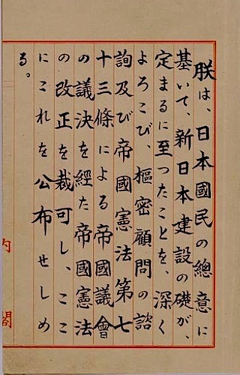
Japan's new constitution took effect on May 3, 1947, and a nation that had waged aggressive war across Asia for fifteen years became, by the stroke of its own legal pen, a country that renounced war forever. Article 9 declared that Japan would never maintain "war potential" or use force to settle international disputes, a clause without precedent in the constitutional history of any major power. The document was drafted in extraordinary circumstances. General Douglas MacArthur, the Supreme Commander of Allied Powers occupying Japan, rejected a conservative Japanese draft that preserved too much imperial authority. He ordered his Government Section staff to write a new constitution in secret, giving them just one week. Twenty-four Americans, including a twenty-two-year-old woman named Beate Sirota Gordon who drafted the women's rights provisions, produced the document in a frenzy of work at the Dai-Ichi Insurance Building in Tokyo. The American draft drew on the U.S. Constitution, the Weimar Republic's charter, and the Soviet constitution, creating a hybrid suited to MacArthur's vision of a demilitarized, democratic Japan. The emperor was retained but stripped of political power, reduced to a ceremonial "symbol of the state." A bicameral legislature, an independent judiciary, and a comprehensive bill of rights replaced the Meiji-era system of imperial sovereignty. Japanese officials revised the language but accepted the fundamental structure, and the Imperial Diet approved the constitution in November 1946. Emperor Hirohito promulgated it as an amendment to the Meiji Constitution, maintaining legal continuity while fundamentally transforming the state. The constitution has never been amended. Article 9 remains the most debated clause in Japanese politics, repeatedly reinterpreted to permit Self-Defense Forces while technically prohibiting a standing military. Japan's pacifist constitution shaped its postwar identity and its alliance with the United States, becoming both a source of national pride and a persistent political flashpoint.
May 3, 1947
79 years ago
Key Figures & Places
What Else Happened on May 3
Ethnic violence erupted between the Meitei and Kuki Zo communities in Manipur, triggered by disputes over land rights and affirmative action status. This confli…
Bird Jaguar IV ascended the throne of Yaxchilan, ending a ten-year interregnum that had paralyzed the city-state’s leadership. By aggressively commissioning mon…
The ground shook three times in 24 hours, but it was the third quake that dropped Rhodes into the sea. Thirty thousand people died when the city's limestone bui…
The monarch took a new name, João, and ordered his entire court to follow him into baptism. Nkuwu Nzinga of Kongo wasn't conquered—he invited the Portuguese pri…
Columbus had already mapped 700 miles of Cuban coastline when his crew spotted mountains rising from turquoise water. May 5, 1494. He named it Santiago, convinc…
The French called it "Matanzas" too—the same name the Spanish had used for their massacre site, which meant "slaughters." Dominique de Gourgues led 150 Frenchme…
Talk to History
Have a conversation with historical figures who witnessed this era. Ask questions, explore perspectives, and bring history to life.