

Japan Invades Tulagi: Coral Sea Battle Begins
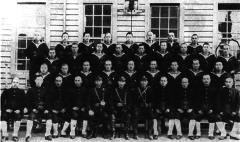
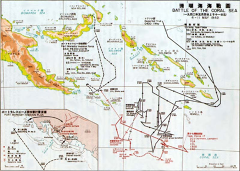
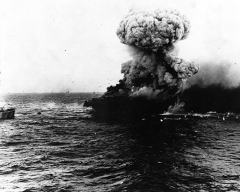
Japanese naval infantry waded ashore at Tulagi in the Solomon Islands on May 3, 1942, seizing the small island and its harbor as part of Operation Mo, a complex plan to capture Port Moresby in New Guinea and extend Japan's defensive perimeter deep into the South Pacific. The landing triggered a sequence of naval engagements that became the Battle of the Coral Sea, the first naval battle in history where opposing ships never saw or fired directly at each other. Tulagi's seizure was a supporting operation. The main Japanese force, built around the light carrier Shoho and the fleet carriers Shokaku and Zuikaku, was tasked with covering an amphibious invasion of Port Moresby, which would have given Japan air superiority over northern Australia and threatened Allied supply lines across the Pacific. Admiral Shigeyoshi Inoue coordinated the operation from Rabaul. American codebreakers at Station Hypo in Hawaii had partially decrypted Japanese naval communications and knew the general outlines of Operation Mo. Admiral Chester Nimitz dispatched the carriers Lexington and Yorktown, under Rear Admiral Frank Jack Fletcher, to intercept. Fletcher's aircraft struck the Tulagi landing force on May 4, sinking a destroyer and several smaller vessels, but the main carrier engagement did not develop until May 7-8. The two-day carrier battle produced mixed tactical results. American aircraft sank the Shoho on May 7, the first Japanese carrier lost in the war. The next day, both sides launched full strikes against each other's fleet carriers. Shokaku was heavily damaged, and the Lexington, hit by torpedoes and bombs, was abandoned and scuttled after uncontrollable aviation fuel fires. Yorktown was damaged but survived. The strategic consequences far outweighed the tactical ambiguity. The Port Moresby invasion was abandoned, marking the first time a Japanese offensive had been turned back. Both Shokaku and Zuikaku were unavailable for the Battle of Midway a month later, a factor that contributed to Japan's decisive defeat there.
May 3, 1942
84 years ago
Key Figures & Places
United States
Wikipedia
Australia
Wikipedia
World War II
Wikipedia
Empire of Japan
Wikipedia
Invasion of Tulagi (May 1942)
Wikipedia
Solomon Islands
Wikipedia
Operation Mo
Wikipedia
Battle of the Coral Sea
Wikipedia
1942
Wikipedia

World War II
Wikipedia

Japanese
Wikipedia

Invasion of Tulagi (May 1942)
Wikipedia

Solomon Islands
Wikipedia

Operation Mo
Wikipedia

Battle of the Coral Sea
Wikipedia

Extermination camp
Wikipedia

SS Cap Arcona
Wikipedia

SS Thielbek (1940)
Wikipedia

Neustädter Bucht
Wikipedia

SS Deutschland (1923)
Wikipedia

Bay of Lübeck
Wikipedia

Pacific War
Wikipedia

Tulagi
Wikipedia

Germany
Wikipedia

Royal Air Force
Wikipedia
What Else Happened on May 3
Ethnic violence erupted between the Meitei and Kuki Zo communities in Manipur, triggered by disputes over land rights and affirmative action status. This confli…
Bird Jaguar IV ascended the throne of Yaxchilan, ending a ten-year interregnum that had paralyzed the city-state’s leadership. By aggressively commissioning mon…
The ground shook three times in 24 hours, but it was the third quake that dropped Rhodes into the sea. Thirty thousand people died when the city's limestone bui…
The monarch took a new name, João, and ordered his entire court to follow him into baptism. Nkuwu Nzinga of Kongo wasn't conquered—he invited the Portuguese pri…
Columbus had already mapped 700 miles of Cuban coastline when his crew spotted mountains rising from turquoise water. May 5, 1494. He named it Santiago, convinc…
The French called it "Matanzas" too—the same name the Spanish had used for their massacre site, which meant "slaughters." Dominique de Gourgues led 150 Frenchme…
Talk to History
Have a conversation with historical figures who witnessed this era. Ask questions, explore perspectives, and bring history to life.