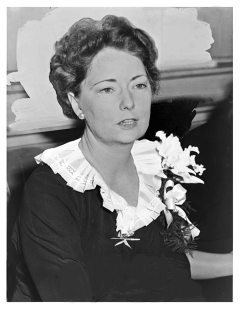
Mitchell Wins Pulitzer for Gone with the Wind
Margaret Mitchell's only novel had sold a million copies in six months, broken every publishing record in American history, and consumed the reading public like no book since Uncle Tom's Cabin. When Gone with the Wind won the Pulitzer Prize for Fiction on May 3, 1937, the award merely confirmed what bookstores already knew: the 1,037-page Civil War romance had become a cultural phenomenon that transcended literary categories. Mitchell, a former Atlanta Journal reporter, had worked on the manuscript in secret for nearly a decade, writing the last chapter first and filling in the middle over years of sporadic effort. She never intended to publish it. A Macmillan editor visiting Atlanta in 1935 heard about the manuscript from a mutual friend, and Mitchell reluctantly handed over a stack of manila envelopes so disorganized that chapters were out of order and some existed in multiple drafts. The novel told the story of Scarlett O'Hara against the backdrop of the Civil War and Reconstruction in Georgia, combining a romantic plot with detailed historical settings drawn from Mitchell's family stories and years of research. Macmillan published it on June 30, 1936, with a first printing of 10,000 copies. Within three weeks, the publisher was reprinting 50,000 copies at a time and still could not meet demand. Critics were divided. Some praised the novel's narrative power and historical sweep. Others, including many Black writers and scholars, condemned its romanticized portrayal of plantation slavery and its sympathetic depiction of the Ku Klux Klan during Reconstruction. The book's enormous popularity cemented Lost Cause mythology in the popular imagination for generations. David O. Selznick's 1939 film adaptation amplified the novel's cultural reach exponentially. The movie won ten Academy Awards and became the highest-grossing film in history when adjusted for inflation, a record it still holds. Mitchell, who received $50,000 for the film rights, never wrote another novel. She died after being struck by a car in Atlanta in 1949.
May 3, 1937
89 years ago
Key Figures & Places
What Else Happened on May 3
Ethnic violence erupted between the Meitei and Kuki Zo communities in Manipur, triggered by disputes over land rights and affirmative action status. This confli…
Bird Jaguar IV ascended the throne of Yaxchilan, ending a ten-year interregnum that had paralyzed the city-state’s leadership. By aggressively commissioning mon…
The ground shook three times in 24 hours, but it was the third quake that dropped Rhodes into the sea. Thirty thousand people died when the city's limestone bui…
The monarch took a new name, João, and ordered his entire court to follow him into baptism. Nkuwu Nzinga of Kongo wasn't conquered—he invited the Portuguese pri…
Columbus had already mapped 700 miles of Cuban coastline when his crew spotted mountains rising from turquoise water. May 5, 1494. He named it Santiago, convinc…
The French called it "Matanzas" too—the same name the Spanish had used for their massacre site, which meant "slaughters." Dominique de Gourgues led 150 Frenchme…
Talk to History
Have a conversation with historical figures who witnessed this era. Ask questions, explore perspectives, and bring history to life.