Soviet Forces Capture Berlin: Nazi Rule Ends
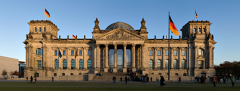
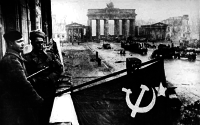
Soviet soldiers raised the red banner over the Reichstag's shattered dome on April 30, but the fighting in Berlin's streets continued for two more days. On May 2, 1945, General Helmuth Weidling, the last commandant of the Berlin Defense Area, surrendered the city's garrison to Soviet forces, ending a battle that had killed an estimated 125,000 civilians and reduced Germany's capital to rubble. The Berlin Strategic Offensive began on April 16, when 2.5 million Soviet troops, supported by 6,250 tanks, launched their assault across the Oder and Neisse rivers. Marshal Georgy Zhukov attacked from the east while Marshal Ivan Konev swept from the south, and the two pincers closed around the city within a week. Hitler, confined to his bunker beneath the Reich Chancellery, refused to authorize retreat or evacuation. Street-by-street urban combat turned Berlin into a slaughterhouse. Soviet forces used massed artillery at point-blank range, reducing buildings to rubble before infantry advanced. German defenders included Volkssturm militia units composed of old men and teenage boys fighting with Panzerfaust anti-tank weapons. Soviet casualties exceeded 80,000 killed in the final two weeks. Hitler shot himself on April 30, leaving Grand Admiral Karl Donitz as his successor. Weidling's surrender order the following day directed all remaining German forces in Berlin to cease fighting, though pockets of resistance continued for hours. Soviet troops discovered Hitler's partially burned remains in the Chancellery garden. The fall of Berlin effectively ended the war in Europe, though the formal German surrender would follow on May 7 at Reims and May 8 in Berlin. The city was divided into four occupation sectors, a partition that hardened into the Cold War's most visible fault line and lasted until 1990.
May 2, 1945
81 years ago
Key Figures & Places
What Else Happened on May 2
King Richard I granted Portsmouth its first Royal Charter, transforming a modest settlement into a strategic naval hub. By establishing the town as a protected …
Prince Llywelyn the Great executed the powerful Marcher lord William de Braose by hanging at Aber after discovering him in his wife’s bedchamber. This brutal ac…
Otto the Merry secured the Duchy of Carinthia, expanding the Habsburg reach deep into the Eastern Alps. By consolidating these territories, he transformed his f…
The charges were written before the interrogations began. Anne Boleyn's arrest on May 2nd, 1536, came with accusations so perfectly coordinated—five men, four d…
Knox stepped off the ship at Leith harbor with a death sentence already on his head—French authorities had burned him in effigy two years earlier. He was fifty-…
The getaway boat almost sank twice crossing Loch Leven. Mary Stuart's teenage admirer Willie Douglas had stolen the castle keys during dinner, locking every gat…
Talk to History
Have a conversation with historical figures who witnessed this era. Ask questions, explore perspectives, and bring history to life.