Charles II Grants Charter: Hudson's Bay Company Rises
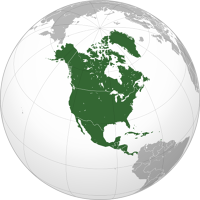
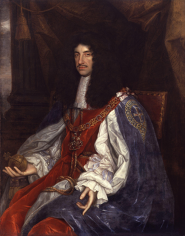
Two French fur traders convinced the English crown to claim a territory larger than Western Europe, and the document that made it happen fit on a single sheet of parchment. On May 2, 1670, King Charles II granted the Governor and Company of Adventurers of England Trading into Hudson's Bay a royal charter that gave them exclusive trading rights over the entire watershed draining into Hudson Bay. The territory covered 1.5 million square miles, roughly a third of modern Canada. Pierre-Esprit Radisson and Medard Chouart des Groseilliers had explored the region and recognized that the richest beaver-trapping grounds lay north of the Great Lakes, accessible by ship through Hudson Bay rather than by the arduous canoe routes from Montreal. When French authorities seized their furs and fined them for trading without a license, the two men took their knowledge to England, where Prince Rupert, the king's cousin, organized a syndicate of investors. The charter named eighteen shareholders, granted them a commercial monopoly, the right to make laws, build forts, raise armies, and wage war against non-Christian peoples. The Company's territory, called Rupert's Land, encompassed all lands draining into Hudson Bay and its tributaries, though no European had mapped most of it. Indigenous nations who had inhabited these lands for millennia were not consulted. For two centuries, the Hudson's Bay Company operated as a de facto government across northern North America, establishing a network of trading posts where Indigenous trappers exchanged beaver pelts for manufactured goods. The "Made Beaver" became the standard unit of currency, and the Company's policies shaped relations between European settlers and Indigenous peoples across the continent. In 1870, the Company surrendered Rupert's Land to the new Dominion of Canada for 300,000 pounds. The HBC still operates as a retail company, making it one of the oldest commercial enterprises on Earth.
May 2, 1670
356 years ago
Key Figures & Places
What Else Happened on May 2
King Richard I granted Portsmouth its first Royal Charter, transforming a modest settlement into a strategic naval hub. By establishing the town as a protected …
Prince Llywelyn the Great executed the powerful Marcher lord William de Braose by hanging at Aber after discovering him in his wife’s bedchamber. This brutal ac…
Otto the Merry secured the Duchy of Carinthia, expanding the Habsburg reach deep into the Eastern Alps. By consolidating these territories, he transformed his f…
The charges were written before the interrogations began. Anne Boleyn's arrest on May 2nd, 1536, came with accusations so perfectly coordinated—five men, four d…
Knox stepped off the ship at Leith harbor with a death sentence already on his head—French authorities had burned him in effigy two years earlier. He was fifty-…
The getaway boat almost sank twice crossing Loch Leven. Mary Stuart's teenage admirer Willie Douglas had stolen the castle keys during dinner, locking every gat…
Talk to History
Have a conversation with historical figures who witnessed this era. Ask questions, explore perspectives, and bring history to life.