

Casey Jones Dies: The Legend of the Railroad Hero
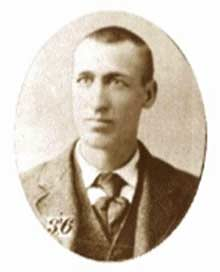
Engineer John Luther "Casey" Jones died at the throttle of Illinois Central Railroad No. 382 on April 30, 1900, when his locomotive plowed into the rear of a stalled freight train at Vaughan, Mississippi. Jones saw the caboose's lights too late to stop but managed to slow the train from 75 miles per hour to roughly 35, saving every passenger aboard. He was the only fatality. His fireman, Sim Webb, jumped clear on Jones's order seconds before impact. The collision was caused by a series of miscommunications: the freight train had not cleared the main line in time, and flag warnings that should have been placed further up the track were positioned too close for a train traveling at Jones's speed. Jones was running late and running fast. He had taken the Cannonball Express from Memphis to Canton, Mississippi, a 188-mile run, and was trying to make up lost time. The Illinois Central was famous for its punishing schedules, and engineers who arrived on time were rewarded with the best runs. Jones was known for his speed and for the distinctive whistle he had rigged on No. 382, a calliope-like six-tone whippoorwill that trackside listeners could identify from miles away. He was 36 years old, married, and the father of three. Wallace Saunders, a Black engine wiper at the Canton roundhouse who had been a close friend of Jones, composed a ballad about the wreck within days. The song, in its original form, was a work song that circulated among railroad workers for several years before professional songwriters T. Lawrence Siebert and Eddie Newton obtained the melody, rewrote the lyrics, and copyrighted it in 1903. The published version, which sanitized the original's rawness and omitted its racial dimensions, became one of the most popular American songs of the early twentieth century and made Casey Jones a national legend. Jones's story endures because it crystallizes the romance and danger of American railroading at its peak. The railroad engineer was the most admired working-class figure in turn-of-the-century America, a skilled professional who commanded a machine of enormous power at lethal speeds. Jones's decision to stay at the throttle and slow the train rather than jump to safety transformed a fatal accident into a narrative of self-sacrifice. Whether he was a hero or simply a man who ran too fast depends on whether you emphasize his bravery in the last seconds or his recklessness in the preceding miles. Both versions are true.
April 30, 1900
126 years ago
Key Figures & Places
What Else Happened on April 30
A dying emperor signed a death warrant for himself by sparing Christians. In 311, Galerius, who'd burned churches and sold confiscated goods, finally ordered al…
Licinius crushed the forces of Maximinus II at the Battle of Tzirallum, securing his sole authority over the Eastern Roman Empire. This victory ended the tetrar…
Licinius defeated the forces of Maximinus Daza at the Battle of Tzirallum, consolidating his absolute control over the Eastern Roman Empire. This victory ended …
A bishop's hand trembled as he anointed Chindasuinth in Toledo, 642. The nobility didn't cheer; they traded chaos for a crown that demanded blood. He'd later fo…
Observers across the globe witnessed a brilliant new star erupt in the constellation Lupus, outshining the moon for months. This celestial explosion, now known …
A rope snapped, sending the King's former chancellor swinging wildly from Montfaucon's gallows while Paris watched in stunned silence. Enguerrand de Marigny, wh…
Talk to History
Have a conversation with historical figures who witnessed this era. Ask questions, explore perspectives, and bring history to life.