

Louisiana Purchase: America Doubles in Size for $15 Million
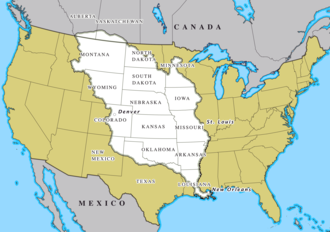
Robert Livingston and James Monroe signed the Louisiana Purchase treaty in Paris on April 30, 1803, acquiring 828,000 square miles of territory from France for $15 million, approximately four cents per acre. The deal doubled the size of the United States overnight, extending its western boundary from the Mississippi River to the Rocky Mountains and encompassing all or part of fifteen future states. Napoleon Bonaparte, who had reacquired the territory from Spain only three years earlier, sold it because his ambitions in the Western Hemisphere had collapsed and he needed cash for his European wars. Napoleon's decision was driven by the catastrophic failure of his attempt to reimpose French control over Saint-Domingue, modern Haiti. An expedition of 20,000 soldiers sent in 1801 to crush the Haitian Revolution was devastated by yellow fever and fierce resistance led by Toussaint Louverture and Jean-Jacques Dessalines. Without Saint-Domingue as a base, Louisiana was strategically useless to France, and Napoleon decided to sell before the British navy could seize it during the next round of European warfare. "I renounce Louisiana," he told his finance minister. "I have already given England a maritime rival who will sooner or later humble her pride." President Thomas Jefferson, who had sent Livingston and Monroe to Paris to buy only New Orleans and the Floridas for up to $10 million, was astonished by the scope of the offer. He also had serious constitutional concerns. The Constitution did not explicitly authorize the president to acquire foreign territory, and Jefferson, a strict constructionist, recognized the contradiction between his political philosophy and the executive action he was taking. He considered proposing a constitutional amendment but ultimately decided the opportunity was too important to risk losing to congressional delay. The Louisiana Purchase transformed the United States from a coastal republic into a continental power. The territory contained the port of New Orleans, the entire Mississippi River drainage, and the agricultural heartland that would feed American expansion for the next century. Lewis and Clark's expedition, launched in 1804 to explore the new acquisition, revealed its staggering scale and diversity. The purchase also deepened the crisis over slavery, since every new territory raised the question of whether it would be free or slave, a question that the Missouri Compromise of 1820 attempted to answer and that the Civil War ultimately decided.
April 30, 1803
223 years ago
Key Figures & Places

France
Wikipedia

United States
Wikipedia
Louisiana Purchase
Wikipedia
Louisiana Territory
Wikipedia
Louisiana Purchase
Wikipedia

Louisiana Territory
Wikipedia

Napoleon
Wikipedia

United States
Wikipedia

Robert R. Livingston
Wikipedia

James Monroe
Wikipedia

François Barbé-Marbois
Wikipedia

Louisiana (New France)
Wikipedia

History of the United States
Wikipedia

Territorial evolution of the United States
Wikipedia
What Else Happened on April 30
A dying emperor signed a death warrant for himself by sparing Christians. In 311, Galerius, who'd burned churches and sold confiscated goods, finally ordered al…
Licinius crushed the forces of Maximinus II at the Battle of Tzirallum, securing his sole authority over the Eastern Roman Empire. This victory ended the tetrar…
Licinius defeated the forces of Maximinus Daza at the Battle of Tzirallum, consolidating his absolute control over the Eastern Roman Empire. This victory ended …
A bishop's hand trembled as he anointed Chindasuinth in Toledo, 642. The nobility didn't cheer; they traded chaos for a crown that demanded blood. He'd later fo…
Observers across the globe witnessed a brilliant new star erupt in the constellation Lupus, outshining the moon for months. This celestial explosion, now known …
A rope snapped, sending the King's former chancellor swinging wildly from Montfaucon's gallows while Paris watched in stunned silence. Enguerrand de Marigny, wh…
Talk to History
Have a conversation with historical figures who witnessed this era. Ask questions, explore perspectives, and bring history to life.