

Beethoven Composes Für Elise: A Masterpiece Hidden for Decades
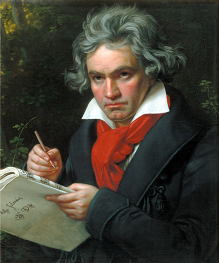
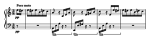
Ludwig van Beethoven composed "Bagatelle No. 25 in A minor" on or around April 27, 1810, writing "Fur Elise" on the manuscript. The piece was never published during his lifetime. It remained unknown until 1867, when the German scholar Ludwig Nohl discovered the autograph manuscript and published it. The original manuscript subsequently disappeared and has never been found, meaning that Nohl's transcription is the only source for one of the most recognized melodies in classical music. Even the identity of "Elise" is uncertain; scholars have proposed several candidates, with Therese Malfatti, a woman Beethoven proposed to in 1810, being the leading contender, her name possibly misread by Nohl from Beethoven's notoriously illegible handwriting. The piece is deceptively simple. Its opening melody, built on a descending pattern of just six notes alternating between E and D-sharp, is recognizable to virtually anyone who has heard Western music. Music students worldwide learn it as an early intermediate piece, and its presence in popular culture ranges from ice cream truck jingles to ringtones. This ubiquity has obscured the piece's actual musical sophistication. The middle sections modulate through unexpected key changes and employ a rhythmic complexity that belies the serene opening theme. Beethoven in 1810 was at the height of his middle period, producing works of enormous ambition and scale: the Fifth and Sixth Symphonies had premiered in 1808, the "Emperor" Concerto was completed in 1809, and the "Archduke" Trio would follow in 1811. Against this backdrop, "Fur Elise" is a miniature, a private gesture rather than a public statement. That Beethoven chose not to publish it suggests he considered it a personal work, perhaps a gift for the unnamed Elise, rather than a piece for the concert hall. The irony of "Fur Elise" is that it has become far more famous than many of the works Beethoven considered his greatest achievements. His late string quartets, which he regarded as his most profound music, are known primarily to classical music devotees. "Fur Elise," which he apparently tossed off as a bagatelle and never revisited, is known to the entire world. The gap between an artist's intentions and posterity's judgment is rarely this wide. Beethoven would probably be annoyed.
April 27, 1810
216 years ago
Key Figures & Places
What Else Happened on April 27
Three hundred captured Iberians stood in chains as Philippus paraded them through Rome's dust, a spectacle for his step-brother Octavian who watched from the cr…
Coins bore his face, not Rome's god. Philip spent fortunes on twenty days of games while legions mutinied on the frontier. He tried to buy a millennium that was…
She brought Frankish steel to Constantinople's silk halls. In 395, Arcadius wed Aelia Eudoxia, daughter of general Flavius Bauto. But she didn't just sit on a t…
The crown sat heavy on Shahrbaraz's head, but his victory tasted like ash from a burning Ctesiphon. After six years of civil war and a dead emperor, he'd traded…
They called it Jabal Tariq. The Rock of Tariq. A mountain named after a Berber general who sailed across the strait with just 7,000 men to face a Visigothic arm…
The crown sat heavy on a man who'd spent decades as an English hostage, not a warrior king. David I didn't just take the throne in 1124; he swapped Scottish cla…
Talk to History
Have a conversation with historical figures who witnessed this era. Ask questions, explore perspectives, and bring history to life.