Magellan Killed in Philippines: Lapu-Lapu Halts Spanish Conquest
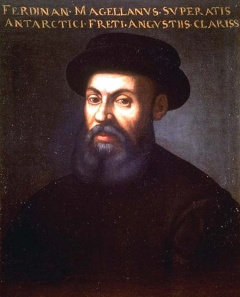
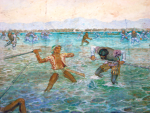
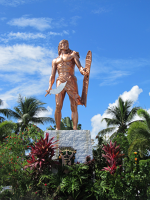
Ferdinand Magellan waded into the shallows off Mactan Island on April 27, 1521, leading a force of forty-nine Europeans against roughly 1,500 warriors commanded by Chief Lapu-Lapu, and died in water barely deep enough to drown in. The Portuguese navigator, who had already accomplished the first European crossing of the Pacific Ocean, was struck by a bamboo spear in the face, then hacked with swords and spears as his men retreated to their boats. His body was never recovered. The first circumnavigation of the globe would be completed by his crew, not by him. Magellan's decision to fight at Mactan was driven by a toxic combination of religious zeal and colonial arrogance. After arriving in the Philippines weeks earlier, he had converted the chief of nearby Cebu, Rajah Humabon, to Christianity and demanded that neighboring chiefs submit to both the Spanish crown and the new faith. Lapu-Lapu refused. Magellan, who had promised Humabon military support as part of the conversion deal, chose to make an example of Mactan. He brought only a fraction of his available force, reportedly wanting to demonstrate that a small number of Spanish soldiers could defeat any indigenous army. The battle exposed the limits of European military technology in unfamiliar terrain. Spanish armor and crossbows, decisive advantages in open-field engagements, were liabilities in chest-deep water against a numerically superior enemy who knew the shoreline. Magellan's men could not maintain formation, their firearms were largely useless in the surf, and the bamboo shields and hardwood weapons of Lapu-Lapu's warriors proved effective at close range. The entire engagement lasted roughly an hour. Magellan's death did not end the expedition. The remaining crew, reduced by disease, desertion, and combat to fewer than 120 men, continued westward under the command of Juan Sebastian Elcano, reaching Spain on September 6, 1522, with just eighteen survivors aboard the Victoria. The voyage proved that the Earth could be circumnavigated by sea and that the Pacific was far larger than any European had imagined. Lapu-Lapu became a national hero in the Philippines, celebrated as the first Southeast Asian to resist European colonization. Magellan is honored as a navigator; Lapu-Lapu is honored as a fighter. Both earned their reputations on the same beach.
April 27, 1521
505 years ago
Key Figures & Places

What Else Happened on April 27
Three hundred captured Iberians stood in chains as Philippus paraded them through Rome's dust, a spectacle for his step-brother Octavian who watched from the cr…
Coins bore his face, not Rome's god. Philip spent fortunes on twenty days of games while legions mutinied on the frontier. He tried to buy a millennium that was…
She brought Frankish steel to Constantinople's silk halls. In 395, Arcadius wed Aelia Eudoxia, daughter of general Flavius Bauto. But she didn't just sit on a t…
The crown sat heavy on Shahrbaraz's head, but his victory tasted like ash from a burning Ctesiphon. After six years of civil war and a dead emperor, he'd traded…
They called it Jabal Tariq. The Rock of Tariq. A mountain named after a Berber general who sailed across the strait with just 7,000 men to face a Visigothic arm…
The crown sat heavy on a man who'd spent decades as an English hostage, not a warrior king. David I didn't just take the throne in 1124; he swapped Scottish cla…
Talk to History
Have a conversation with historical figures who witnessed this era. Ask questions, explore perspectives, and bring history to life.