

Boston Under Siege: The Revolutionary War Escalates
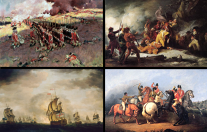
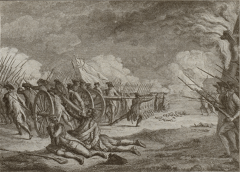
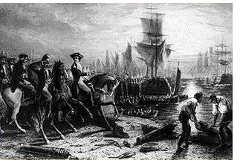
Colonial militia companies surrounded British-held Boston on April 20, 1775, the day after the battles at Lexington and Concord, beginning a siege that would last eleven months and eventually force the complete British evacuation of the city. Within days, an estimated 15,000 armed New England men had converged on the outskirts of Boston from Massachusetts, Connecticut, Rhode Island, and New Hampshire, forming an improvised army that outnumbered the British garrison by more than two to one. The speed of the mobilization stunned both sides. General Thomas Gage, commanding approximately 6,000 British regulars, had expected to deal with scattered resistance from poorly armed farmers. Instead, he found himself trapped on a peninsula connected to the mainland by a single narrow neck, surrounded by an enemy that grew larger every day. Gage's forces controlled Boston and the harbor, but the rebels held every approach by land, and the thousands of Loyalist civilians sheltering in the city strained his provisions. The siege produced the war's first major battle on June 17, 1775, when British troops stormed colonial fortifications on Breed's Hill in the Battle of Bunker Hill. The British took the position but at devastating cost: 1,054 casualties out of 2,200 troops engaged, including 226 killed. Colonial losses were roughly half that. The battle proved that militia could stand against British regulars in a fortified position, boosting American morale while shocking London. General William Howe, who replaced Gage, became far more cautious after watching his men cut down climbing the hill. George Washington arrived in July 1775 to take command of what was now the Continental Army. He spent months transforming the militia encampment into something resembling a professional force. The siege ended dramatically in March 1776, when Henry Knox's artillery, dragged overland from Fort Ticonderoga in a remarkable winter expedition, was emplaced on Dorchester Heights overlooking the city and harbor. Howe recognized that his position was untenable and evacuated Boston on March 17, 1776, taking 9,000 troops and over 1,000 Loyalist civilians to Halifax, Nova Scotia.
April 20, 1775
251 years ago
Key Figures & Places
What Else Happened on April 20
A mother and son fought over Jerusalem, not for glory, but for who held the reins of power. For eight years, Baldwin III and Queen Melisende clashed, tearing th…
Pope Boniface VIII issued the papal bull In Supremae Praeminentia Dignitatis to establish the Sapienza University of Rome. By centralizing ecclesiastical educat…
Three Genoese galleys smashed through the massive Ottoman blockade to deliver vital supplies and reinforcements to Constantinople. This tactical victory briefly…
Jacques Cartier departed Saint-Malo with two ships, sailing across the Atlantic to map the Gulf of St. Lawrence. By claiming these lands for France, he initiate…
A ghostly halo split the sky over Stockholm, three suns burning where only one should be. The crowd didn't just stare; they panicked, convinced the apocalypse h…
He kicked the door open, grabbed his hat, and told them to pack their bags. Cromwell didn't just dissolve the Rump Parliament; he dragged away the few MPs who s…
Talk to History
Have a conversation with historical figures who witnessed this era. Ask questions, explore perspectives, and bring history to life.