
Students Force Rhee Out: South Korea's Democratic Dawn
Thousands of university students surged through the streets of Seoul on April 19, 1960, demanding the resignation of President Syngman Rhee and an end to twelve years of increasingly authoritarian rule. Police opened fire on the marchers, killing an estimated 186 people and wounding over a thousand. Rather than silencing the movement, the massacre inflamed it. The April Revolution, as it became known, forced Rhee to resign a week later and flee to exile in Hawaii, establishing the pattern of student-led democratic movements that would define South Korean politics for decades. Rhee had been South Korea's founding president, installed by the United States in 1948 as a bulwark against communism on the divided peninsula. He was a Princeton-educated Korean nationalist who had spent decades in exile lobbying for Korean independence from Japan. But power corroded his democratic commitments. He amended the constitution to remove presidential term limits, jailed political opponents, and controlled the press. The March 1960 presidential election, in which Rhee claimed 90 percent of the vote, was so blatantly rigged that it provoked the popular explosion that followed. The catalyst for the April 19 uprising was the discovery of a student's body in Masan harbor on March 15. Kim Ju-yul, a high school student, had been killed by a tear gas grenade embedded in his skull during a protest against the fraudulent election. Photographs of his body circulated widely, and university students in Seoul organized the mass march that confronted Rhee's police. When the police fired into the crowd, professors joined their students in the streets, and Rhee's remaining support collapsed. Rhee resigned on April 26 and was flown to Hawaii aboard a CIA aircraft, where he lived in exile until his death in 1965. The democratic government that replaced him lasted barely a year before General Park Chung-hee seized power in a military coup in May 1961. South Korea would not achieve lasting democracy until 1987, after another generation of student protests and military crackdowns. The April Revolution failed to produce stable democracy, but it created the template that Korean democratic movements followed for the next three decades.
April 19, 1960
66 years ago
Key Figures & Places
President of South Korea
Wikipedia
President
Wikipedia
South Korea
Wikipedia
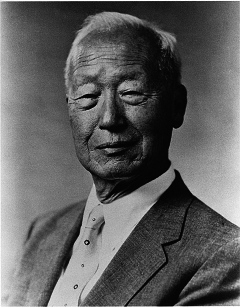
Syngman Rhee
Wikipedia
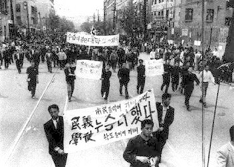
a nationwide pro-democracy protest
Wikipedia
April Revolution
Wikipedia
President of South Korea
Wikipedia
Syngman Rhee
Wikipedia
Seoul
Wikipedia
South Korea
Wikipedia
Hawaii
Wikipedia
Histoire de la Corée du Sud
Wikipedia
What Else Happened on April 19
A slave named Milichus didn't just overhear a whisper; he heard his master Piso plotting to kill Nero himself. The freedman raced through Rome's dark streets, r…
Belisarius didn't just lose; he lost his cavalry to a Persian arrow that shattered his shield and forced a chaotic retreat across the Euphrates. Thousands of me…
Danish raiders bludgeoned the Archbishop of Canterbury, Ælfheah, to death after he refused to authorize a massive ransom payment from his impoverished people. H…
Three days of fire and blood in April 1506 turned Lisbon's streets red. Angry mobs dragged the "New Christians" from their homes, burning them alive at the Ross…
Seven German princes and four free cities just refused to sign a decree banning Luther's teachings. They didn't care that Emperor Charles V had already crushed …
The Treaty of Frankfurt of 1539 gave German Protestants a temporary reprieve — 15 months during which Charles V agreed to pause enforcement of the Edict of Worm…
Talk to History
Have a conversation with historical figures who witnessed this era. Ask questions, explore perspectives, and bring history to life.