

MGM Studios Born: Hollywood's Golden Age Takes Shape
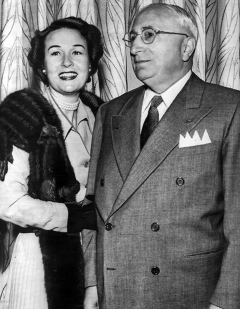
Metro-Goldwyn-Mayer was assembled on April 17, 1924, through the merger of three failing studios into what would become the most powerful and prolific film factory in Hollywood history. Marcus Loew, who owned the theater chain Loew's Inc., orchestrated the combination of Metro Pictures, Goldwyn Pictures, and Louis B. Mayer Productions to secure a reliable supply of films for his cinemas. Mayer, a ruthless showman who had risen from scrap metal dealing in New Brunswick, Canada, was installed as studio chief. Irving Thalberg, just 25 years old, became head of production. The merger gave MGM the Goldwyn studio lot in Culver City, which became the physical plant for what Mayer and Thalberg would call "the Tiffany of studios." Their formula was simple and expensive: hire the biggest stars, build the most elaborate sets, and spare no cost on production values. Within five years, MGM boasted "more stars than there are in heaven," a roster that included Greta Garbo, Clark Gable, Joan Crawford, Jean Harlow, Spencer Tracy, and the Marx Brothers. The studio's lion logo, introduced in 1924, became the most recognized symbol in cinema. Thalberg's production system combined artistic ambition with assembly-line efficiency. He supervised every film personally, demanding rewrites and reshoots until he was satisfied. Under his direction, MGM produced Grand Hotel, Mutiny on the Bounty, and The Good Earth, winning the Best Picture Oscar repeatedly. Thalberg's death in 1936 at age 37 removed the creative counterbalance to Mayer's commercial instincts, and the studio's artistic reputation gradually declined even as its profits remained strong. MGM dominated Hollywood for three decades, producing roughly one film per week during its peak years. The studio system that Mayer perfected, in which actors, directors, writers, and technicians were all under exclusive contract, gave the studio total control over its product and its stars' public images. That system collapsed in the 1950s under pressure from television, antitrust rulings that forced studios to sell their theater chains, and a new generation of independent filmmakers who rejected factory-produced entertainment. By the 1970s, the lot in Culver City was selling off its props and costumes at auction.
April 17, 1924
102 years ago
Key Figures & Places

What Else Happened on April 17
Vitellius claimed the Roman throne after his legions crushed Otho’s forces at the First Battle of Bedriacum. This victory ended the brief reign of the third emp…
A crown slipped off a dying king's head in 1080, but Harald III left behind a throne that felt like a trap for his nephew. Canute IV took over, not just to rule…
A single poisoned cup ended the Bavand rule in 1349. The ruler drank, choked, and died while his guards watched silently. Now the Afrasiyab family seized the th…
Hasan II fell to an assassin’s blade, extinguishing the Bavand dynasty’s seven-century hold over the Mazandaran region. This power vacuum allowed the rival Afra…
Teutonic knights breached the walls of Kaunas Castle after a brutal month-long siege, capturing the Lithuanian stronghold and seizing its commander, Vaidotas. T…
A poet named Chaucer didn't just read to King Richard II; he gambled his reputation on a ragtag group of pilgrims in 1397. While the court dined, Chaucer introd…
Talk to History
Have a conversation with historical figures who witnessed this era. Ask questions, explore perspectives, and bring history to life.