Spindletop Gushes: Texas Oil Boom Begins
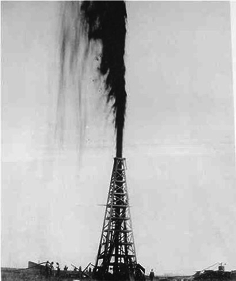
A column of crude oil shot 150 feet into the Texas sky on January 10, 1901, and stayed there for nine days before anyone could cap it. The Lucas Gusher at Spindletop, near Beaumont, Texas, produced an estimated 100,000 barrels per day, more oil in a single day than every other well in America combined. The roar of the gusher could be heard miles away. The oil soaked everything within a quarter mile, turning the surrounding prairie into a black lake. Anthony Lucas, a Croatian-born mining engineer, had been drilling on the salt dome formation at Spindletop Hill against the advice of nearly every geologist he consulted. Standard Oil''s experts told him there was no oil in southeastern Texas. Lucas ran out of money twice and was kept afloat only by the backing of Pittsburgh investors John Galey and James Guffey. At 1,139 feet, the drill pipe shot out of the ground, followed by mud, gas, and then a torrent of oil that turned daylight into dusk. Within months, Beaumont''s population tripled from 10,000 to 30,000 as wildcatters, speculators, roughnecks, and con men flooded in. Land that had sold for $10 an acre before the gusher went for $900,000. Over 600 oil companies were chartered within a year, most of them worthless. But several major corporations emerged from the Spindletop boom: Texaco, Gulf Oil, and Humble Oil, the predecessor of ExxonMobil. These companies would dominate the global petroleum industry for the next century. Spindletop broke John D. Rockefeller''s near-monopoly on American oil. Standard Oil had controlled refining and distribution through the eastern pipeline network. Spindletop''s Texas crude flooded the market from outside Standard''s system, driving prices down and opening the industry to competition. Before the gusher, oil was primarily a source of kerosene for lamps. After it, cheap abundant petroleum became the fuel that powered automobiles, ships, factories, and eventually aircraft. The modern petrochemical economy was born in a muddy field outside Beaumont.
January 10, 1901
125 years ago
Key Figures & Places

What Else Happened on January 10
Julius Caesar marched his Thirteenth Legion across the Rubicon, defying the Roman Senate’s direct order to disband his army. This breach of provincial boundarie…
The imperial throne wasn't just changing hands—it was being seized through cosmic theater. Wang Mang, a cunning court official, didn't just stage a coup; he cla…
Julius Caesar marched his Thirteenth Legion across the Rubicon, defying the Roman Senate’s direct order to disband his army. By crossing this boundary, he commi…
Emperor Galba adopted Lucius Calpurnius Piso Licinianus as his successor, hoping to stabilize a fractured Roman state through a formal transfer of power. Instea…
Fabian ascended to the papacy after a dove reportedly landed on his head during the election, an omen that convinced the gathered crowd of his divine selection.…
A dusty, brutal siege that nobody saw coming. Norman mercenaries—those French warriors who'd become Italy's most unexpected conquerors—thundered into Sicily's m…
Talk to History
Have a conversation with historical figures who witnessed this era. Ask questions, explore perspectives, and bring history to life.